Hurricane Katrina Then And Now
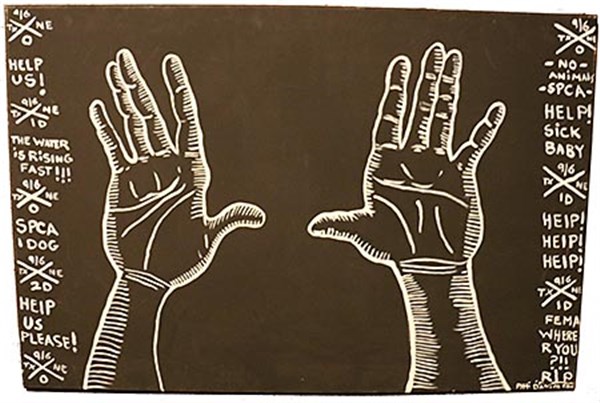
This painting is from a series of Post Katrina paintings by artist Pati D’Amico. The painting is called “Desperation” and was part of a traveling Hurricane Katrina Blues exhibit featuring work from 20 New Orleans artists that toured five states.
Reflections From Pati D’Amico A Decade After The Storm
For my husband and I, we felt extremely fortunate. We had evacuated at 3 a.m. August 28th following an art opening for photographer Jonathan Traviesa that lasted until almost midnight on August 27 in our gallery, the Waiting Room.
The event was wonderful, a pretty packed house… but there was an enormous sense from our friends and guests that something BIG was going to change our lives forever.
We ended up traveling to Sherveport, La., with three pets, two cats and a lab/pit mix named Boo. We were sitting in our van having breakfast at Walmart on August 29, alongside many evacuees who were camping out on the edge of the parking lot. A young woman approached us and asked if we’d like to stay at a Baptist church where she was a member. After speaking with the pastor, who had just moved from New Orleans, we decided to stay. We thought it would be for a day or two – then the levees broke.
We ended donating to the church and stayed five weeks until we could return home. The church members were wonderful, they took in 50 evacuees, giving families private rooms from unused office space on church grounds and they even allowed pets. I worked with the church doing everything from cleaning mobile homes for new evacuees to sewing pillows for nursing home clients with fellow church ladies. I found a job house and pet sitting for a family that lived nearby.
My mom gathered friends together to send a big donation to the church.
During our stay in Shreveport we spent quite a bit of time talking to our insurance company and many adjusters who were fired regularly or quit after being overwhelmed.
We brought a fellow evacuee, Paul, back home to stay with us until he could get alternate housing and repair his flooded home. It took him six months to get a FEMA trailer and then FEMA forgot to give him the key to his trailer. This was NOT unusual for FEMA. Paul lived in our gallery, which we furnished with a bed and cd player. He hated TV. He was our living ART MAN. When we had openings, Paul stayed with us on the other side of our shotgun double. He and my husband helped repair our roof until our roofer could reshingle it 18 months later.
We came back home to New Orleans on October 5. Though the city looked ravaged, we felt so lucky to be able to return to our neighborhood in Bywater. Our roof lost over 80 percent of it’s shingles, a mini tornado had ripped through the backyard taking down a wall between our home and our neighbors. The railroad cross ties used for our garden had floated and banged around quite a bit mangling our gutters, but amazingly our home was beaten up, but not too seriously.
We helped gut homes, clean the streets, make stop signs for areas where the signs had blown down, organized piles of trash and found jobs immediately doing everything from floor repair and pet sitting. We also helped folks sort through their belongings, which was a very emotional and tedious task for those whose homes had flooded.
I worked for the first two months at The Lafitte Guest House in the French Quarter organizing the hotel and preparing it for reopening. In December I began working for my former clients who returned to the city.
I lost one of my closest friendships due to the stress of the storm. My husband and I had helped her through the evacuation, finding her housing and when we could, financial help. Her home received massive flood damage and she lost her beloved cats. We haven’t spoken since November, 2005, though I have tried to contact her through letters. It was like a death to me.
Keeping Busy
To keep busy after the storm was to stay sane. There was a good feeling of community spirit everywhere. The Bacchanal Bar and Restaurant in Bywater had a weekly dinner using chefs who had lost their jobs. Local musicians provided live music. It was nice to see your few neighbors and friends, it made you sort-of feel normal for a moment or two.
Our neighborhood lost it’s grocery stores, banks, gas stations, so we traveled Uptown to shop, or across the river. We bought tire insurance since it was the norm to get flat tires from the scattered debris. Grocery shopping became a way of letting off steam. Strangers stopped and talked in parking lots, telling their stories about the storm and where they were living. The first few months felt hopeful. Then the emotional stress started to kick in. Crime began to return in mid-2006. Many friends became ill due to physical or emotional challenges.
I actually tried to go to a therapist in May, 2006. The building on Canal Street I was to have my therapy session had been flooded and the first floor was gutted. An office was on the second floor. The secretary had just returned home and had been living in her car for three weeks. I felt wimpy and ashamed of my grief and left before the session. I think many of us who “didn’t flood” had this feeling. It’s like folks who survive a plane crash, there is a feeling of guilt, “why did I make it?”
But my husband and I continued on, we were part of many Post Katrina art shows including the Hurricane Katrina Blues Exhibit, which traveled to five states and ended at our gallery, The Waiting Room,. in March of 2008. We had hurricane recovery parties, continued working and tried to keep a normal routine with ourselves and friends. Our decision to leave New Orleans was caused by two incidents that affected many in our community. Between late December, 2006, and early 2007, we lost two wonderful neighbors due to random crime acts. One of the victims was a founding member of the Hot 8 Brass Band, the other was an artist, Helen Hill.
The murder of Helen Hill really was the “last straw” for me and my husband. Both crimes prompted a massive protest march in the city immediately after the murders. Though I didn’t know Helen as a close friend, I liked her very much, she was incredibly bright and just received the Rockefeller Grant for film making. There was a mysterious goodness about her, seeing her ride her bike with her child made you feel good. We couldn’t wrap our heads around this loss.
Why Helen?
She was shot in her home by an intruder. Her husband, who was holding their child, was shot twice, but survived. Their child was not harmed and the suspect was never found.
After a lot of contemplation we put our home on the market in the fall of 2007 and it sold in May, 2008. We felt it might be good to live in a quiet place with more nature surrounding us. We chose this area because we wanted to live “not too far” from New Orleans. Oxford was rated one of the 100 best small art towns in the U.S., but was expensive for home buying.
Water Valley is very affordable and we found a great old house and arrived in June of 2008, not knowing a soul, just like our arrival in New Orleans.
Since moving here we helped start the Water Valley Arts Council in 2009, with a lovely and smart woman, Ramona Bernard, and Susan Hart (former member of the Water Valley Main Street Association.) My husband, Bill Warren, is co-director alongside Bernard.
We started an annual Art Crawl that has garnered a lot of positive feedback from the community and across the state. My husband and I also helped start similar events in Rhode Island and New Orleans.
We have two very good art galleries in town, not bad for a town of 3,500, Yalo Studio owned by Coulter Fussell and Bozarts Gallery. We’re members of Bozarts (a cooperative of 15 members) and the studio is owned by Water Valley Main Street Association Manager Mickey Howley and his wife, Annette Trefzer, who teaches Southern Literature at Ole Miss.
My husband restarted his sign business soon after moving to Water Valley. He has made 25-plus signs for Water Valley and many other towns throughout the state. He makes beautiful, artful “old school” hand-painted signs. I have continued making art (artist books, assemblages and paintings for our gallery and for teaching workshops at other facilities). Bill continues to paint and sculpt up a storm. We’re feeling a little more settled in our new life here in the “Hill Country” of north Missis-sippi.
It took at least three years to feel at ease here due to post-Katrina stress and change. Do we miss New Orleans? Absolutely!! The city embraced us and gave us a wonderful, quirky community with friendships and magic that we will never forget. We lived in Bywater for 11 years after moving from Providence, Rhode Island, our home of 22 years. We operated our gallery the entire time and showed some of the best artists, musicians and poets, both regionally and internationally. I was amazed by our good fortune.
But the experience of Hurricane Katrina taught that life (in every way) can change in an instant. You can’t look back, you must accept the present and be grateful for the small stuff. In the end that’s the most important healer for your soul and survival.