Old Oakland School Designated Historic Building
PROTECTED CONTENT
If you’re a current subscriber, log in below. If you would like to subscribe, please click the subscribe tab above.
Username and Password Help
Please enter your email and we will send you a password reset link.
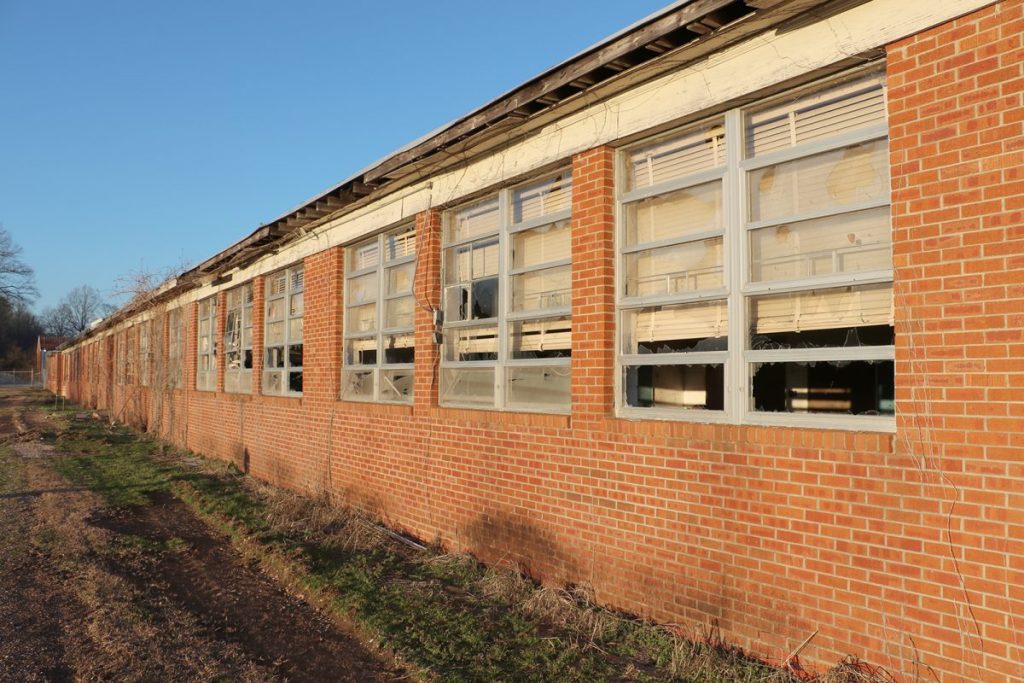
The classrooms at the old Oakland school have been vacant for decades.
JACKSON – The Mississippi Historic Preservation Professional Review Board has voted to designate the old Walker High School located on Hwy. 51 south of Oakland as a historic property, a potential catalyst for future development with eligibility for tax credits.
Following the state approval, the application was submitted to the United States Department of the Interior, which administers the National Register of Historic Places, for final review and approval. This designation can help incentivize private investment with eligibility for the New Markets Tax Credit Program and Federal Historic Preservation Tax Incentives in addition to historic tax credits from the state.
“The state board has submitted it to the Department of Interior who generally follow the state’s lead,” reported Yalobusha County Economic Development District Executive Director Kagan Coughlin.
Coughlin submitted the application, or nomination form, to the Mississippi Department of Archives and History outlining the historical and cultural significance of the property. The state approval came during a meeting on Nov. 21.
“There are a lot of empty buildings in the state. To demonstrate that it is culturally significant, historically significant, you need to have a story. What happened inside the building,” Coughlin explained. “This building is not architecturally interesting, it is just a cinder block and brick veneer building, but it served a lot of folks.”
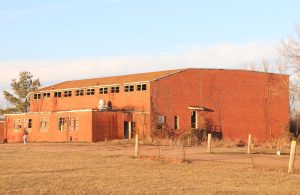
The gym is located on the south end of the old Oakland school.
The old school buildings and surrounding acreage are owned by Yalobusha County and the plan identified by Coughlin and the Board of Supervisors is to sell the property to a developer to refurbish the old buildings for use as apartments or other development.
“Now the search is underway for someone who wants to come fix it up. It is an asset, and the plan is to turn it into a $2 million asset that will pay property taxes,” Coughlin explained.
The cinderblock classroom building was constructed in 1954. An adjacent gymnasium building was constructed in 1958 and an annex was added to the north end and connected by an enclosed walkway in 1960. The buildings last operated as a public school in 1970.
“The former school building is a well-preserved example of an African American school from Mississippi’s Equalization Period, with Equalization funding paired with private funds from the black community of Oakland to provide local, accessible education access,” Coughlin explained.
An adjacent metal building was also constructed on the 12-acre site in the late 1960s for use as an automotive training facility, also paid for by Equalization Funds.
“It was top-of-the-line, black and white students were educated at this facility,” Coughlin added about the automotive training facility.
Coughlin reported that the rich history helped prove the school building is historically and culturally significant to the county and state. The school was originally known as the Oakland Colored School, and was renamed in 1960 in honor of Jimmie D. Walker, Sr., the school principal for a dozen years.
The Coffeeville Consolidated School District sold the buildings and 12 acres to Yalobusha County in 1999. The buildings remained empty for decades, with only intermittent use for athletic and civic events until 2014 when county supervisors ended all activity after an asbestos study indicated potential problems. The metal building remains in use as the operations hub for county operations for District 4 Supervisor Eddie Harris.
Coughlin shared part of the challenge in documenting the history of the school was tracking down information.
“There is really not much written down,” Coughlin explained.
Mayor James Riley Swearengen and Ollie Beth Whiting provided first-hand experience as former students at the school. Oakland resident Margaret Ross also helped him track down much-needed photographs that were included in the application.
Calvin Hawkins’ 2022 publication, “Under the Dusty Sand,” that features African American history in the county from 1870 to 1970 also included information about the school.
Historical Significance
Coughlin’s presentation to the Mississippi Historic Preservation Professional Review Board included detailed information authenticating the property’s eligibility for designation as historic site in the areas of education and ethnic heritage. Among items of interest in the lengthy application:
• The Oakland Colored School, later Walker High School, is locally significant for its role in African American education in Yalobusha County, and as a campus that was building and expanded under Mississippi’s Equalization Program, which transformed Mississippi’s educational landscape.
• The Equalization Program was part of the “separate but equal doctrine,” and although the U.S. Supreme Court passed down its landmark desegregation case, Brown v. Board of Education, in May, 1954, Mississippi leaders remained committed to the idea that black residents would acquiesce to segregation as long as they were provided equal facilities.
• The original construction in 1954 was only possible after private funding was provided by the local African American community to purchase the 12-acre site, as well as funds to furnish the completed building. These resources, paired with funds made available through the Equalization efforts across Mississippi, funded the construction, and subsequent expansion of this school.
• Walker High School afforded African Americans students access to academics, and after the addition of the gymnasium in 1958, athletics with a strong focus on basketball.
• Between 1954 and 1965, the state allocated about $115 million to school construction projects around the state, the majority of them either establishing new consolidated campuses for black students or dramatically expanding existing campuses. Black schools that had been built during the first phase of equalization were typical candidates for becoming the nucleus of new consolidated campuses during the second phase of equalization, and the Oakland Colored School was one of these.
• The state and county policies of Equalization were reinforced within Oakland: Opportunities for African American students to integrate schools were suppressed through the 1960s with a pressure campaign by white land owners in Oakland intended to intimidate African American families with threats of eviction from their homes, (located on white-owned land.) Three African American students from the Walker High School opted to leave Oakland voluntarily in 1969 to attend the Coffeeville Consolidated Schools, with full integration following the next year, when all African American students from the Oakland area were bussed to the consolidated schools in Coffeeville.