Policies Prompt Dialogue In Monthly Aldermen Meeting
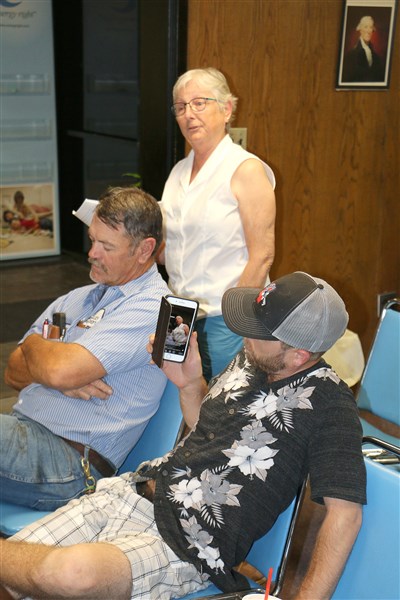
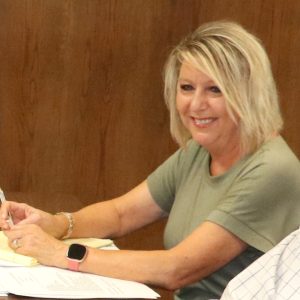
Charlotte Lane (standing) asked for city officials do a better job of informing the public about meetings, including providing the agenda prior to the meetings. Ironically Matt Reardon (holding phone) reported that he requested to appear on the agenda weeks before the meeting to ask city for the state flag to be flown over city hall. Reardon said he was told only hours before the meeting that he was not on the agenda. Reardon live-streamed the meeting on Facebook.
By David Howell
Editor
WATER VALLEY – City officials continued work on policy matters in addition to handling routine business during a 90-minute meeting last Tuesday night. Sept. 5. Discussion on two policies, one for public records and another for the agenda, generated the most interesting and lengthy dialogue in the monthly meeting.
The public records request policy, which defines how the city handles a request for public documents, was initially presented by Board Attorney John Crow last month for review. The dialogue about the policy brought a brief exchange as Ward 1 Alderman Kagan Coughlin and Ward 3 Alderman Cinnamon Foster had questions about the policy for Crow.
Crow first explained the city has seven days to respond from the date of a public records request before the officials delved off into the details.
“We can’t pass it like it was written. There are some corrections,” Foster noted, referring to the first draft Crow presented to the board last month.
“I have already made the corrections,” Crow said, explaining that the policy presented the previous month had been updated with pertinent corrections.
The next question was about the current policy used by the city to handle public records requests.
“I don’t believe we have one,” City Clerk Vivian Snider answered, adding that she could only recall a handful, maybe three, requests from the public for city information.
“Then we have just been going by the statute,” Crow explained about how the city handled the previous requests.
Foster also asked about creating an official form for the public to fill out to request information from the city.
“If we are going to enact this, we need to have a form that goes with it,” Foster recommended.
“You don’t have to,” Crow said.
“I would like to,” Foster answered.
“What is the state statute that we are following today?” Coughlin asked about the current protocol for handling the requests.
“I don’t know what the statute number is,” Snider answered.
“It’s 25-61-1,” Foster answered.
“What instigated the need for us to adopt this personal form?” Coughlin asked.
“To have it,” Crow answered.
“Is this one better than the state?” Coughlin asked.
“This is the state (statute). It is the state statutes in body and we are making a policy for it,” Crow answered.
“It is not the whole code, this is just parts of the code,” Ward Four Alderman Nicole Folson added.
“You know next time I am not going to go out and do this on my own,” Crow added, referring to presenting the policy to the board for adoption with being so instructed.
“We appreciate it, but we are new, hun, we are trying to figure it out,” Foster countered.
“I am aware of that. I am very well aware of that,” Crow said.
Coughlin then asked how the city currently handles a public records request.
“Everything we do is under the laws and the Constitution of the State of Mississippi,” Crow said.
“Wonderful, glad to hear it,” Coughlin said.
“We are going to adopt our own policy, which is going to change how we behave in what ways?” Coughlin asked, adding he would like to know what the difference is in how the requests are currently handled and how they would be handled under the new policy.
“Same thing,” Crow answered.
“So why do we need to adopt this?” Coughlin asked.
“Then don’t do it,” Crow answered.
“Sir, can you please explain why we need to adopt this?” Coughlin asked.
“All of the other cities do it, the county does it,” Crow responded.
“To me, it seems like it is spelling out who is responsible to respond,” Alderman-at-Large Donald Gray added, noting that the policy provides instruction to the city clerk on how to handle the requests.
Crow explained that instead of looking up the state code for direction on handling a public records request, the policy condenses the information to five pages for the clerk.
“There is nothing in here that is different?” Coughlin asked.
“It complies with the code,” Crow said.
“Man, this is paranoia,” Crow continued.
“I have never had such a hostile answer,” Coughlin said.
“I am not paranoid,” Foster also said.
“I won’t do it again, that is for sure,” Crow told the alderman.
“I am sorry, I appreciate you helping us, that is your job,” Foster said.
“You have no reason to apologize to me. Any question is welcome,” Crow said.
“Any input that you have for the board…” Foster said.
“I have been through 37 years of government and, quite frankly, I have never had questions before. And I have served under probably 50 different supervisors and aldermen, maybe 100. And no questions have ever come like this,” Crow said.
“Just to understand what is happening,” Coughlin said.
“No questions have ever come like this,” Crow reiterated.
“Like this, we are just asking simple questions,” Foster said.
“I’m done with it,” Crow said.
“Are you quitting?” Foster asked.
“No,” Crow answered.
“I think it makes it easier if somebody comes in,” City Clerk Vivian Snider added about adopting the policy.
“Did someone ask you to do this?” Coughlin asked.
“No,” Crow answered, explaining that he provided an explanation during the previous month’s meeting – city and county attorneys across the state share information on a law blog, which is where he picked up the policy for review by city officials.
The conversation then shifted to how much time the city has to respond to a public records request.
“Is seven days more time or less time?” Coughlin asked about the response time the city would need to handle the requests.
“It is the only time, that is the state statute,” Foster answered.
“You don’t have to give seven days,” Crow answered.
“If you don’t have a policy, you have to get it to them within one day,” Foster added.
“No, I don’t what you are reading from?” Crow countered about Foster’s information.
“I am reading from the state statute,” Foster answered.
“You are not reading out of the code book,” Crow said.
Yes, this is directly out of the code book. I went to the state website, I am just helping Kagan,” Foster continued.
You see that code book back there? That is the law,” Crow continued, adding that the info Foster got off the website may not be accurate.
“It says ‘if a public body has not adopted written procedures, the right to inspect… a public record of a public body shall be provided within one working day ’. This policy being put in place is helping Vivian, it gives her time, seven days to get this done,” Foster explained.
“It never takes seven days…,” Crow responded, before adding that the city clerk may not be able to immediately respond to a public records request.
“Exactly, that is why this policy is good for us,” Foster answered, referring to the policy giving the city up to seven days to respond.
“Let’s go forward,” Mayor Larry Hart said, intervening in the dialogue.
“I didn’t get an answer from Mr. Crow. Is seven days more time or less time or is it the standard time?” Coughlin said about the city’s response time to handle a public records request.
“The code says seven days,” Crow answered.
“Great, thank you sir,” Coughlin said.
“This is great, I love it,” Foster said about discussing the policy before voting on it.
Foster then questioned specific wording in the policy presented by Crow, including the fees charged and information that may be redacted.
“This talks about non-exempt material, we left that piece out,” Foster said, comparing state statute to the policy presented by Crow last month.
“It’s in there. Last time I gave you a mixed up copy, I am sorry about that,” Crow answered.
“This is all I had to go on,” Foster said.
Foster also asked about a fee schedule, which wasn’t in the policy.
“We don’t have a fee schedule. These are drawn up by some of the best attorneys in the state. This was drawn up by DeSoto County, the leading county in the state,” Crow explained about the origin of the policy he presented to the board.
“I am not disputing that, I am just asking questions. You are the teacher and I am the student,” Foster noted.
“I am not the teacher,” Crow countered.
Foster also noted exemptions for private information listed in state statute were not in the policy.
“Exemptions are in the (state) code,” Crow explained.
“We don’t have to have that in our policy?” Foster asked.
“No, because we have the state law,” Crow stated.
“So no matter what, the state law is going to supersede our policy?” Foster asked.
“Yes,” Crow answered.
“Questions answered, thank you so much,” Foster said.
“Do you have any more questions?” Hart asked.
“No sir,” Coughlin answered.
“John, do you want to finish reading (the policy)?” Hart asked, about reading the policy in its entirety before a vote was taken.
“I don’t know,” Crow answered.
“That is not funny, guys,” Foster said.
“If y’all got any more questions, let her rip,” Crow said before reading the policy and making adjustments to make the five-page document specific to Water Valley.
Crow also paused during the reading, explaining said the earlier reference by Foster for a one-day turn around time to handle a public records request if a policy is not currently in place was accurate.
“I agree with Cinnamon… this is a 66-year old memory, that it does say one day but it can be extended by policy,” Crow said, drawing a round of laughter.
“Did you say we couldn’t act on this tonight?” Hart asked about adopting the policy after Crow read the document.
“I am going to make those changes, I would rather have it in final form,” Crow answered, recommending to delay the vote until the corrected copy is presented to aldermen next month.
Discussion About Agenda Policy
The second policy discussed was the agenda protocol for meetings, and first surfaced from local citizen Charlotte Lane, who was on the Sept. 5 agenda.
“My request is for the board to consider options for keeping our community, and clearly new members of the board, about what is going on in our city government,” Lane told city officials.
Lane suggested citizens should have access to an agenda prior to arriving at a city meeting. She added that discussion about items on an agenda could decrease the amount of time it takes during a meeting to bring everyone up to speed and could allow for more informed decisions to be made by aldermen with input from their constituents.
Lane also said her request also applies to the planning commission meetings.
“I am requesting that the board begin to work on a process for a better way to share information with the citizens of this community,” Lane said.
“Can we discuss this?” Coughlin asked.
“We will continue on here,” Hart said.
“Could the board take a moment to discuss among themselves what was just proposed?” Coughlin asked again.
“Yes, about three minutes,” Hart said.
“I completely agree,” Coughlin said about Lane’s input about having information prior to the meeting.
“We don’t send them to Europe,” Hart said, referring to Coughlin being out of town.
“Email works all over the globe, sir,” Coughlin countered.
Coughlin then said he would be comfortable with having a draft of the agenda a week prior to the meeting.
“I am not quite sure why we wait until the last minute to let anyone know what is going to be discussed at these meetings,” he said, citing other governing bodies including the county supervisors meetings that have a working agenda for review prior to the meeting.
“They have policies in place to have a copy of the agenda in advance, a copy of the minutes from the last meeting in advance. They are readily available, either on a website or by an email from a city clerk,” Foster said about policies other governing bodies have adopted.
“We are all about open government. We haven’t tried to hide anything during the years I have been on here,” Gray said, noting that a website for the city could help distribute this information.
“I think we could start with some time improvements,” Coughlin added, referring to the current practice that aldermen do not receive a copy of the agenda until they arrive at the meeting. He also noted to properly conduct business, city officials need advance notice to prepare for the topics that will be discussed. Couglin also added that his request would not limit last-minute items that needed to be added to the agenda each month if aldermen receive a copy of it early.
“I agree,” Crow said about not limiting last minute requests, noting that if the agenda has a cut-off time for additions and something comes up, the city will be forced to have a recessed or special meeting to deal with the issue.
“We already have that, the agenda is closed Thursday at 5 p.m.,” Foster noted about a current cut-off policy utilized by the city, which is the Thursday prior to the next Tuesday’s meeting date.
“I don’t know what you have,” Crow said.
“Vivian can tell you, the agenda is closed on Thursday at 5,” Foster noted about the city’s current protocol.
“That is right,” Snider answered.
Crow then reiterated that if something comes up after the cut-off date, and is not added to the agenda, it would cause the city to schedule another meeting to handle the matter.
Foster also noted that aldermen have the right and authority to talk about something that comes up during the monthly meeting without having it listed on the agenda.
“I agree,” Crow noted.
“What can we do to have our agenda available to us and the public… What kind of ordinance can we adopt to make that happen?” Coughlin asked.
“You can have a policy,” Crow answered.
Foster recommended providing a packet of information to each aldermen prior to the meeting, similar to what other cities do, a packet that would include the minutes from the previous meeting, the claims docket and the agenda.
Coughlin then proposed a timeline, that the information be accessible to aldermen eight days prior to the monthly meetings and include supporting documentation for agenda items to allow aldermen to prepare for the topics.
Does that sound okay?” Coughlin asked, as Ward 2 Alderman Fred White entered the meeting an hour and 15 minutes late.
“I will do the best I can,” Snider answered about provided the information requested by Coughlin.
“How do we make that official?” Coughlin asked.
“Why don’t you get that yourself together, jot that down and submit it to Vivian and let her massage her and see if she can do it,” Hart instructed.
“Those two sentences?” Coughlin asked about his request.
“Come on dude, you need to hang around here a little bit,” Hart instructed.
“If I see the agenda beforehand, it is because I have personally came to this building and asked three times.
“Exactly,” Hart said.
“And I am an elected official who is supposed to make decisions on behalf of everyone who elected me,” Coughlin said.
“And you can come to this building and glean that information. But I understand what you are wanting. Just helter skelter, here, give me this, this and this, why don’t you jot it down for her (Vivian) and let her work her way through it and see if she can get it,” Hart recommended.
“Is that the appropriate process to adopt a policy? To consult with Vivian to make sure it fits her abilities and time and then submit it to the board?” Coughlin asked.
“I think what Larry was talking about is to see if she can handle this, what we have talked about thus far,” Crow answered, adding that after the details are worked out, his office will generate a policy for adoption.
Other business conducted at the meeting included:
• Agreed to add the fire department to the agenda next month to discuss long-term issues including personnel, wages and equipment. Another item, traffic calming was identified as a topic for discussion at the October 3 meeting.
• Heard the monthly report from Main Street Manager Mickey Howley
• Approved the purchase of a new police car at a cost of $22,279. Hart explained a new car is purchased each year as part of the fleet rotation.
• Approved the municipal compliance questionnaire as completed by Snider. The approval came after Foster, Coughlin and Folson read the policy during the meeting.
• Approved a request from Folson and Foster to attend two conferences for aldermen at a cost of $110.
• Approved a request from Hart to advertise for hauling and laying asphalt for work on city streets.