After A Dozen Years Of Minor Infractions, Casey’s Luck Ran Out On April 30, 1900
PROTECTED CONTENT
If you’re a current subscriber, log in below. If you would like to subscribe, please click the subscribe tab above.
Username and Password Help
Please enter your email and we will send you a password reset link.

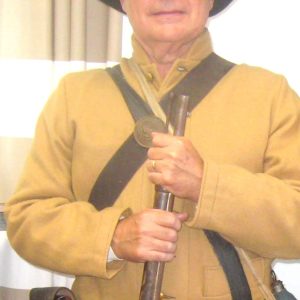
Grant Thompson, curator of the Water Valley Casey Jones Railroad Museum, was guest speaker at Blackmur Library’s Lunch and Learn program on Wednesday, May 1. Thompson’s program focused on the life, legacy and death of the Casey Jones. The event was co-sponsored by the library and the Friends of the Blackmur Memorial Library. – Photo by Brandon Presley and (below) Jack Gurner
By Jack Gurner
Herald Contributor
WATER VALLEY – Who was Casey Jones and why was he famous?” That was the question Grant Thompson asked at the beginning of his talk last Wednesday at the Blackmur Memorial Library.
Thompson, curator of the Water Valley Casey Jones Railroad Museum, spoke during the first of a series of Lunch and Learn presentations sponsored by Friends of the Blackmur Memorial Library. The talk came on May 1, the day after the 124th anniversary of Casey’s wreck at Vaughan.
“Casey Jones is probably the most famous person to ever walk the streets of Water Valley and call our town home,” he added. “But, was he just a mythical creature?”
Definitely not, according to Thompson. “There have been plays written about him; there have been books written about him. He was an engineer for the Illinois Central Railroad and during his 12-years on the Mississippi Division, he primarily worked between Jackson, Tennessee and Canton, Mississippi. The majority of his career was spent on this railroad here.”
Although many people think that Casey became famous because of the wreck, it was actually the song that made him famous. “The Ballad of Casey Jones sold 20 million copies of sheet music before World War I,” he said.
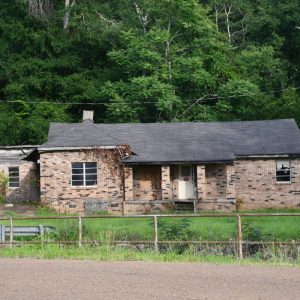
Thompson also explained about the time that Casey and his family lived in Water Valley. “We know that between 1894 and 1896 he lived here. We have ledger records from Goodwin Hardware that show when he moved into town and furnished his home and we also we have the records where he purchased the shipping crates to pack it all up and move back to Jackson.”
Thompson added that Casey was a good employee of the Illinois Central and was well liked by his peers. “But, we do have letters from people who worked with him that said he was a bit of a chance taker. When you are a chance taker on a single-track railroad, you are setting yourself for a potential disaster.”
After 12 years of minor infractions of the rules, Casey’s luck ran out and he lost his life in the wreck at Vaughan in the early morning hours of April 30, 1900. His final run started at the Poplar Avenue station in Memphis after Casey volunteered to fill in for fellow engineer Sam Tate who was ill.
Tate was the regular engineer on the No. 1 train, which became known as the City of New Orleans in later years. When Casey took over, the train was already one hour and 35 minutes late. There was no official reason for attempting to make up for lost time. Casey’s only job was to deliver the passengers and mail in the same amount of time it normally took to get from Memphis to Canton.
Those who knew Casey probably weren’t surprised that he was moving fast as he headed south on the No. 1 train. With his reputation, it would only be natural that he wouldn’t pass up the opportunity to make a record run.
Thompson said that Casey had made up 30 minutes of the lost time when they stopped in Sardis for water. “That reveals how fast Casey was going,” he said.
By the time Casey got to Durant, he had made up all the lost time and was set to go to Canton on schedule. But, there was one more obstacle to clear. “At Vaughan it all comes to a head,” Thompson noted.
There were a lot of factors that contributed to the wreck at Vaughan, according to Thompson. One of the most important was lack of communication. “The primary form of communication was the telegraph,” said Thompson, describing the primitive way of distributing information.
“There was a breakdown of communication and an unforeseeable event,” he added. An airline broke that operated the brakes on the No. 72 train waiting for Casey to pass at Vaughan. That caused the train to be frozen in place on the mainline.
Flagman John Newberry was sent out on foot to use an emergency flag signal to stop Casey. He was supposed to walk a mile up the track so that there would be enough time for the massive steam engine to stop.
Sim Webb, Casey’s fireman, said that he and Casey saw the red lantern signal and heard the exploding torpedo signals, but it was too late to bring the train to a complete halt and the No. 1 train hit the caboose and boxcars on the mainline.
“We’ve got a big mess,” Thompson commented. “And, who do you think was in charge of the clean-up – Water Valley.”
By the summer of that year, the engine had been repaired and was ready for road duty again, according to Thompson. “And, the rest is history.”