Clerk Questions City Books
PROTECTED CONTENT
If you’re a current subscriber, log in below. If you would like to subscribe, please click the subscribe tab above.
Username and Password Help
Please enter your email and we will send you a password reset link.
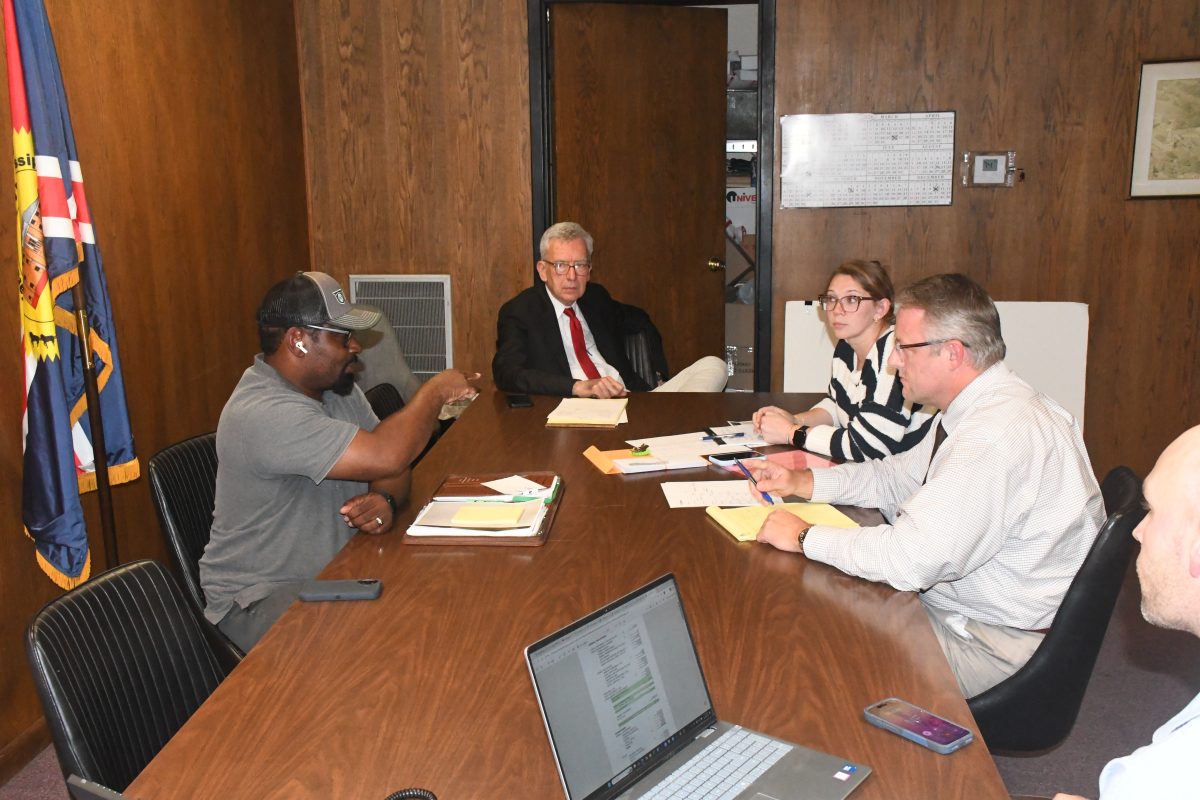
Joy Welch provided an overview of the city’s books during the October 21 meeting.
WATER VALLEY – Water Valley’s new city clerk has identified a series of problems with the city’s financial recordkeeping, including checks dating back several years that were never deposited, incomplete bank reconciliation records, unprocessed tax-sale transactions and more than 40 bank accounts that complicate the management of city funds.
Joy Welch, who began work Oct. 1, delivered a sobering assessment during the Board of Aldermen’s Tuesday, Oct. 20 meeting, identifying shortcomings in the city’s accounting and recordkeeping procedures. While her findings did not suggest wrongdoing, they raised significant concerns about the accuracy and reliability of the city’s financial records.
Her report came as aldermen approved a tax-anticipation loan of up to $450,000 to help the city meet operating expenses until property tax collections begin arriving.
The developments follow weeks of discussion about the city’s financial condition, including the loss of payments in lieu of taxes from revenue generated by the sell of electricity for the Water Valley Utilities Commission and concerns about insufficient unrestricted cash to meet operating expenses.
Welch told aldermen that one of her first concerns involved the handling of money received at City Hall.
When she arrived, she said, deputy clerks did not have individually assigned cash drawers. Instead, money collected during the day was placed in a box inside the vault without being counted and reconciled against receipts at the end of each business day.
Welch said she has since established separate cash drawers with designated beginning balances, daily counting procedures and a system for matching collections with receipts.
She has also established daily deposit records and procedures for reconciling cash, checks and credit card payments.
Another problem involves checks that were received but not deposited promptly. Welch said she found checks dating as far back as 2019, primarily involving cemetery transactions. Other checks that had been held for extended periods were deposited before she began work but were returned by banks because they were too old.
Some returned checks involved property tax payments, complicating efforts to identify taxpayers and collect the money.
Welch also reported that the city’s Aug. 31 tax sale had not been entered into the accounting system and that some related funds had not been deposited. She said the missing records complicate the processing of delinquent tax redemptions and associated fees.
Another concern was the city’s more than 40 bank accounts, some containing less than $200 or dormant from inactivity. Frequent transfers between accounts have made tracking funds and reconciling balances difficult. Welch proposed consolidating accounts where legally permissible.
Following her report, Welch presented recommendations for consolidating bank accounts, simplifying accounting procedures and reorganizing duties within the clerk’s office. The changes would include moving deputy clerks to the front of the office and relocating her workspace to a more private area where she could focus on financial records and other responsibilities. She asked aldermen to review her proposals and consider the changes before taking action.
Questions About Cash Balances
The discussion also brought renewed attention to the city’s shortage of operating cash.
A day earlier, during an Oct. 19 budget meeting, Reynolds had painted a bleak picture of the city’s finances.
“Well, the good news is we have $1,000 in the bank. Roughly. Roughly. The bad news is we’ve had to stop writing checks,” Reynolds told aldermen.
The following meeting, Alderman Grant Thompson questioned whether that figure accurately reflected the city’s financial position.
“We were told yesterday that we have a thousand dollars left in the city. Is that entirely true?” Thompson asked.
“At that moment that was the money that was in the general fund account,” Welch replied.
“That you pay your bills out of,” Reynolds added.
“No. Money is being pulled from other accounts to pay bills out and put into that account,” Welch responded.
City Approves Borrowing
To help meet operating expenses, aldermen approved a tax-anticipation line of credit of up to $450,000 through BankFirst, which offered an interest rate of 4.25 percent. FNB submitted a competing proposal at 6.45 percent.
The arrangement allows the city to borrow money as needed rather than taking the entire $450,000 at once, reducing the amount of interest paid.
The loan must be repaid from property tax collections by March 15. County Tax Assessor-Collector Michael Walton has projected approximately $1.25 million in city property tax revenue in the 2026-2027 fiscal year, based on a 95 percent collection rate.
During the discussion, Water Valley firefighter Skyler Defer questioned how the city would repay the loan and what effect that repayment would have on money available for operations during the remainder of the fiscal year.
“How are we going to pay this off March the 15th?” Defer asked.
Reynolds explained that the loan would be secured by incoming property tax revenue, which would be used to repay the bank.
“Look, you’re borrowing from what you’re going to get to take care of your current expenses right now,” Reynolds said. “That’s the way that’s working.”
Defer continued to question what would remain for city operations after the borrowed money was repaid.
Reynolds acknowledged that the arrangement was not a long-term solution.
“Now, is it wise in a long-term basis? That’s a different question,” Reynolds said. “This isn’t my baby. I’m just rocking this, okay?” Reynolds said. “If it were up to me, this wouldn’t happen.”
“It’s your baby, too,” Alderperson Nicole Folson responded.
The exchange followed Reynolds’ push for the Water Valley Utilities Commission to restore the full payment in lieu of taxes, rather than accept a proposed cost-sharing arrangement of approximately $250,000 annually.
The Board of Aldermen will meet again Tuesday, Nov. 3.