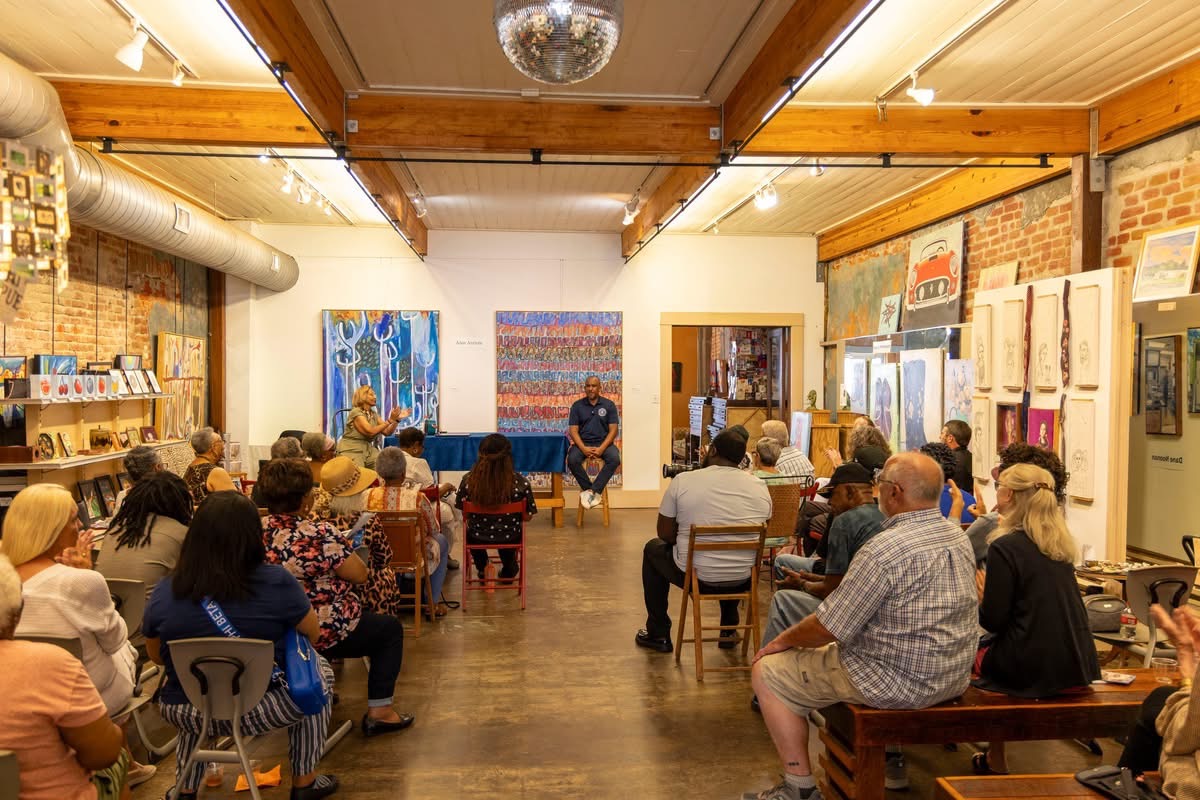
A crowd gathers at Bozarts Gallery in Water Valley on Sept. 19 to hear U.S. Senate candidate Scott Colom during a question-and-answer session led by Dottie Chapman Reed. The program was held in conjunction with an exhibit featuring the Emma Spencer Gooch Yalobusha County Voting Rights collection, highlighting the efforts of local residents who worked to register Black voters during the civil rights movement.

About The Author
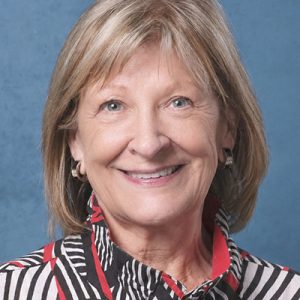
Dottie Chapman Reed is a Water Valley native and a 1970 graduate of Davidson High School. A 1974 graduate of the University of Mississippi, she is the author of Outstanding Black Women of Yalobusha County: Their Stories and Their Contributions to a Mississippi Community, a book that grew out of her award-winning North Mississippi Herald column published from 2018 through 2020.
When we planned the September exhibit of The Emma Spencer Gooch Yalobusha County Voting Rights materials, we had no idea that we would have a chance to meet and hear from the man who has now been elected Mississippi’s first Black U.S. senator since Reconstruction. In my career, I have had the opportunity to interview a few famous people. However, having a fireside chat with Scott Colom in September, ahead of the Nov. 3 midterm elections, was a bit nerve-wracking.
Why?
I was scared that something might happen to him while he was in Water Valley. I knew he had his press corps with him, but I did not see any security. I longed for at least one of my sons to be there to protect us – perhaps the Army Captain or the 6-foot-5 West Pointer or my baby boy who has previously come to watch out for me at whatever program we were doing. I longed for my late young cousin Jametric Judson, who always had my back when I came to town. Yes, I was seriously concerned that someone might do something crazy in this town where I was born and raised, where I graduated from the university 18 miles to the north.
I could feel the tension based on the purpose of the main event: promoting voting and voter registration based on the work of the Yalobusha Mississippi Voter’s League in the late 1960s and early 1970s in an art gallery on Main Street owned by a white woman from Germany. We had a sign in the window with a picture of a Black man running for the U.S. Senate, and we were honoring several Yalobusha citizens starting with Emma Spencer Gooch, whose collection of Voter League materials is archived at the University of Mississippi, and many others who registered Blacks then, among them my mother Helen Chapman, Stephen Brown, Annie Hervey, Oscar Spencer, and Doll Ann Henderson. This alone could provoke animosity and racism, but our event was peaceful and successful.
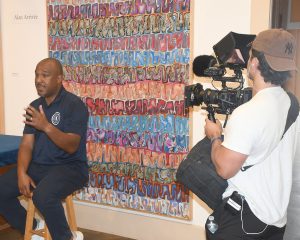 Though always energetic and now on a tight schedule, Scott took the time to be with us. While his campaign asked me to submit questions in advance, once we got started I realized that he had much to say, and I let him say it. He stated his platform with sincerity and was well received, leaving us optimistic. I must admit, though, that I was disappointed that more of the Black folks I know did not show up. I hope they regret it. It was the weekend of the Ole Miss vs. LSU game, but no excuse.
Scott won Yalobusha County by 92 votes, according to the official vote count, but like so many, I was anxious waiting for his race against Cindy Hyde-Smith to be called. I alternated between disbelief when he was ahead and skepticism that the lead would hold given the current state government’s opportunities to take away our vote and a Colom victory.
And, too, while we were waiting, my alma mater again experienced negative national publicity due to a Ring camera episode on Nov. 6. It seems to never end. Since I graduated and worked for the university a long time ago, I have withheld my comments out of respect for those who are there now to address the situation. However, when my grandsons, ages 10 and 7, who are Georgia Bulldogs fans, asked me why – during the Nov. 7 game against Georgia – Ole Miss fans threw things on the field while the Rebels were trailing Georgia in the second quarter, I had no answer. Actions speak louder than words. It is difficult to know why these bad behaviors continue to occur and racism prevails in Mississippi.
I live in Georgia now, but when I was in Jackson last year, I visited Medgar Evers’ home – he was murdered in the driveway as he returned from an NAACP meeting. Scott did a commercial from there during the campaign.
When I recruited for Ole Miss in the 1970s, I called on the high school across the street from Fannie Lou Hamer’s daycare in Ruleville. I remember watching her speak at the 1964 Democratic National Convention. I read about how she was arrested, beaten, severely injured and driven out of her home. Yalobusha County borders Tallahatchie County where Emmett Till’s body was found in the Tallahatchie River in 1955.
Scott Colom’s victory brings back many painful memories, but they are leavened with pride at what has been accomplished in my home state. His boldness, bravery and determination really showed through when he attended a Trump rally and walked the line talking to the attendees. We must support Senator Colom because so much must be done to help the citizens of Mississippi whose needs are so great.
My college friend Donald Dickerson, from Scott’s hometown of Columbus was at Tougaloo College for the victory speech in Jackson and shared these thoughts with me the morning after.
——————————
“In the celebration of this momentous moment, a lot of superlatives were mentioned. Here’s my humble take. Scott’s victory is more significant than we can ever imagine. On the tail end of the Blue Wave, his victory is the one that broke the Republican’s back. For never in their wildest fear they thought they could lose Mississippi and to a Black man. Ronald Reagan must be rolling in his grave. Last night on that stage at Tougaloo College, where in the 1960’s, Joan Baez sang freedom songs, her biggest song played out, last night was the night that they ‘Drove Ole Dixon Down’.”
——————————
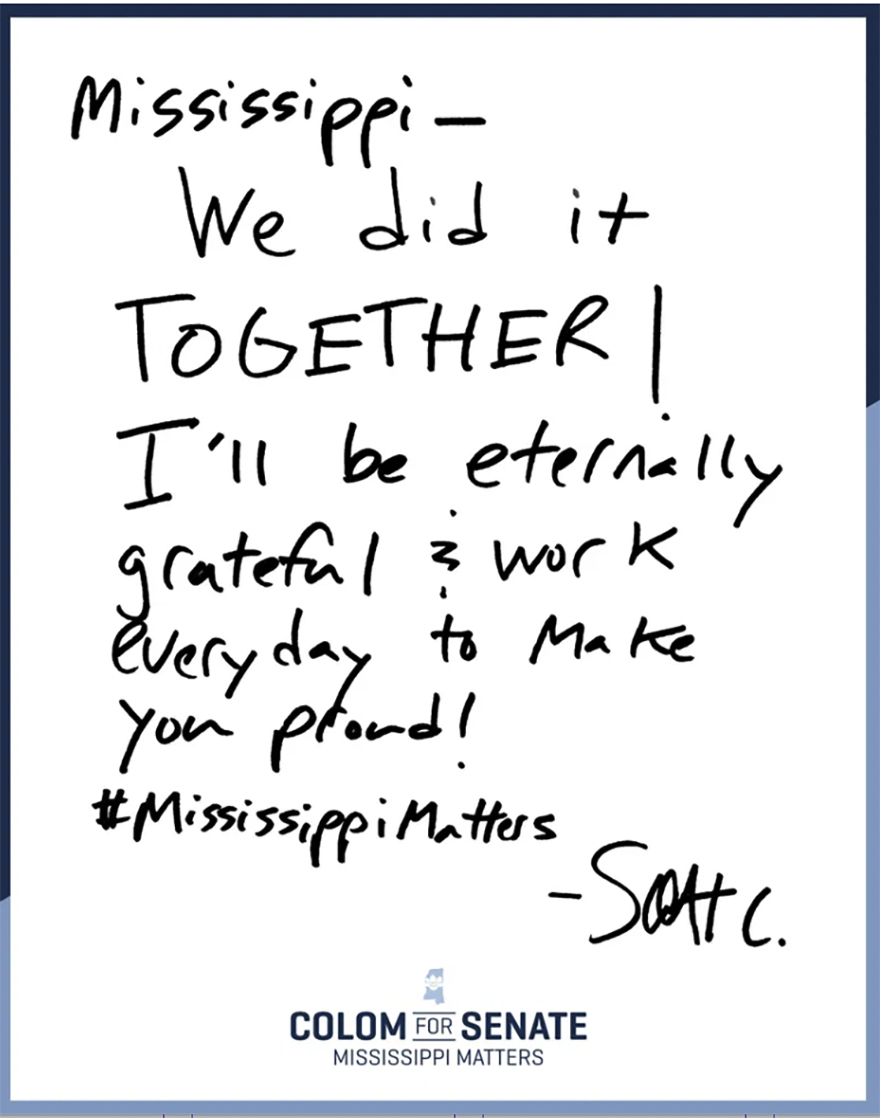
Donald’s thoughts prompted me to get the reaction to Scott Colom’s victory from retired C.M.E. Bishop Thomas Brown Sr., who drove his father, Stephen Brown, to those voter registration meetings in the late 1960s, so often during Yalobusha’s dark nights. Thomas and I became friends in high school and reconnected as students at Ole Miss. While we now live under the Confederate monument of Stone Mountain, Georgia – literally only miles away – with its own troubled history, our allegiance to civil rights prevails. See his remarks below.
As Scott stated in his acceptance speech, he kept the faith when it seemed impossible. He won. We won, and Mississippi will never be the same! Thank you, Scott!
Some Reflections on the Historic Election of Senator-Elect Scott Colom
The election of Scott Colom as the first African American to be popularly elected a senator from Mississippi is a major watershed in the history and life of Mississippi politics. His election signals the fulfillment of generational prayers, sacrificial work, and hopes of many who struggled, suffered, and died for the results of November 3, 2026. Mr. Colom’s election is also a testament to his character, courage, political savvy, and unmatched commitment to make the seemingly impossible happen.
It is further noteworthy that the social, economic and political climate of our nation was ripe for such a happening. Mr. Colom’s election brings to mind the work of the likes of Aaron Henry; the mean and cowardly assassination of Medgar Evers; the unmatched cry of injustice by the mother of Emmett Till; Fannie Lou Hamer’s novel and creative leadership; James Meredith’s daring walk against the racist closed doors of Ole Miss; and the senseless and inhumane murders of James Chaney, Andrew Goodman, and Michael Schwerner in Neshoba County, Mississippi. Additionally, countless unnamed men and women fought for justice, the right to vote, and the opportunities to fully participate in the political arena of American constitutional rights denied Blacks in Mississippi. Among those was my late father, Stephen Brown, a brave and effective leader in Yalobusha County, helping to educate and register the Black population in the 1960s.
Finally, Mr. Colom’s improbable victory offers some solace and poetic justice for the racist and demeaning choice of his opponent, Cindy Hyde-Smith, who effectively blocked his opportunity to be appointed a federal judge by former President Joe Biden.
Praise God from Whom All Blessings Flow!
Thomas L. Brown Sr.
Retired Bishop
Christian Methodist Episcopal Church