Rare Seeds Take Root in Water Valley
PROTECTED CONTENT
If you’re a current subscriber, log in below. If you would like to subscribe, please click the subscribe tab above.
Username and Password Help
Please enter your email and we will send you a password reset link.
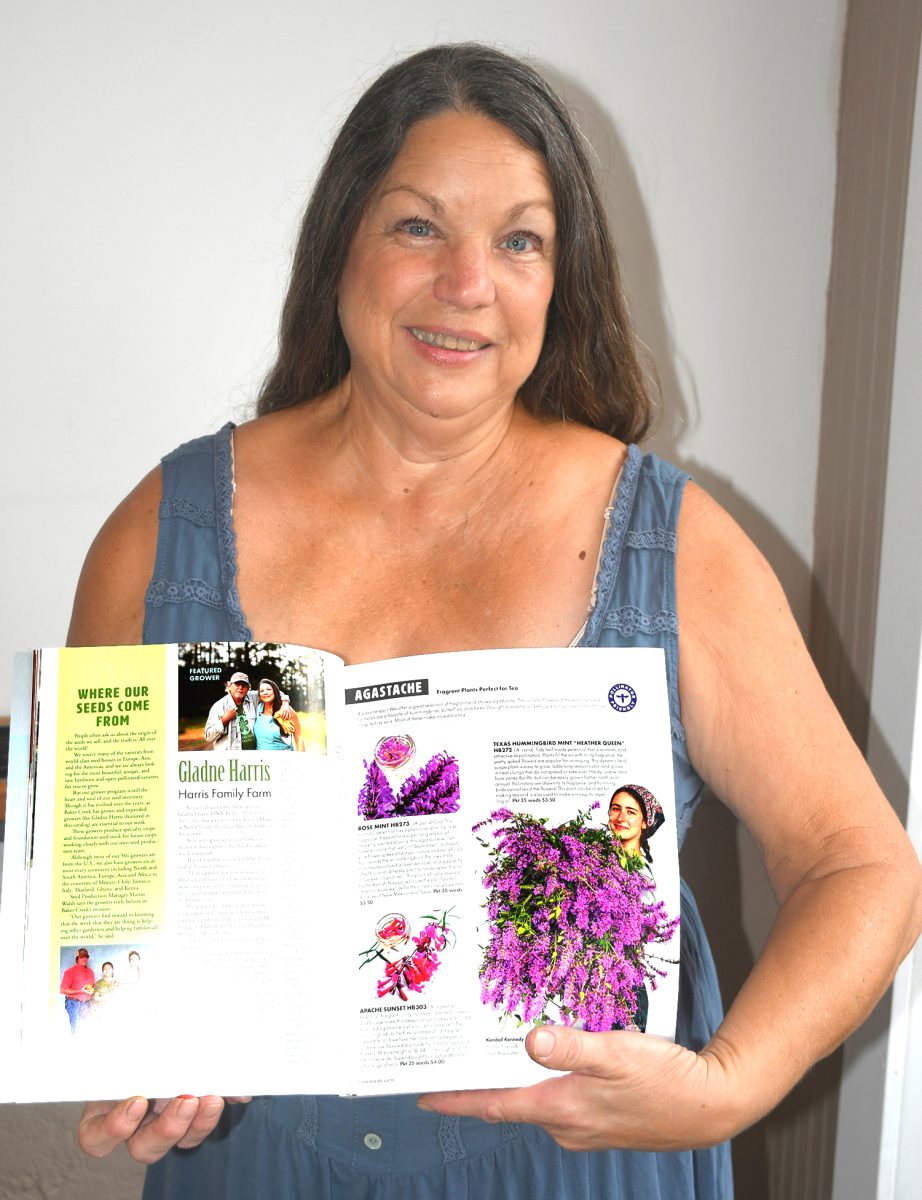
Gladne Harris holds the 2026 edition of Baker Creek’s The Whole Seed Catalog, which features Harris Family Farm and the rare and heirloom seed varieties she grows.
WATER VALLEY — On 232 acres outside Water Valley, Gladne Harris grows crops most people have never heard of. Some arrive as only a handful of seeds. Others come with a request for pounds of seed to be harvested and returned. Many are rare varieties that originated in other parts of the world.
Harris is a seed grower for Baker Creek Heirloom Seed Co., creating rare and heirloom seed at Harris Family Farm, which she operates with her husband, David.
Their work is featured in the 2026 edition of Baker Creek’s The Whole Seed Catalog, a 532-page publication reaching gardeners across the United States and beyond.
For Harris, the recognition is exciting, but so is never knowing exactly what she may be asked to grow next.
“I never know what they’re going to send me,” she said. “It’s the experience that I love.”
Over the years, Harris has grown seed crops for Baker Creek ranging from cucumbers, garlic and watermelons to peas and scorpion peppers.
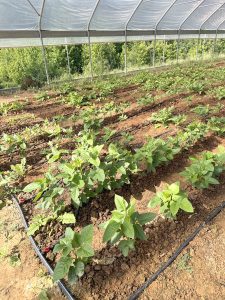
A high tunnel at Harris Family Farm provides David and Gladne Harris additional growing space on their farm.
The catalog notes that in 2025 the Harrises grew seed stock of Ashlabad, a Central Asian melon named for the capital of Turkmenistan. This year, Harris is growing Chappie Small peas for Baker Creek, which has requested approximately 100 pounds of seed.
Other projects begin with only a few seeds.
“One time he sent me something, he had 10 seeds, and he said, ‘See what you can get out of this,’” Harris recalled.
From those few seeds, Harris grows the crop to maturity and harvests the seed to increase the supply.
Growing for seed is considerably different from growing vegetables for the dinner table.
“You have to let your fruit mature a little bit longer because you want the seeds to be fully mature,” Harris said. “Your goal is not necessarily to produce.”
The farm is particularly suited for seed production because its 232 acres provide the isolation distances needed to prevent varieties from cross-pollinating. That is important when growing seed that must remain true to a particular variety.
For Harris, part of the appeal is growing unusual varieties and learning the stories behind them.
The catalog profile features both Gladne and David Harris and their Water Valley farm. Baker Creek also invited Gladne Harris to be among more than 20 speakers at its Spring Planting Festival and Back to the Land Exposition in Mansfield, Missouri.
Harris spoke about regenerative soil practices, using work on a new high tunnel at Harris Family Farm as an example.
Heavy equipment had left the soil there hard and compacted. Harris began with a soil test, added organic amendments and planted a cover crop that included daikon radishes and winter rye.
Her first recommendation to home gardeners is simple.
“That’s the No. 1 thing I would say,” Harris said. “Do a soil test.”
Harris said improving soil organically takes more patience than applying synthetic fertilizer, but she said the soil improves from year to year.
“When you do organic, you’re building your soil up to be healthy,” she said. “It gets healthier every year, better and better every year.”
Seed production is only part of Harris Family Farm’s operation. Gladne and David also grow plants for home gardeners, concentrating on varieties selected for flavor, hardiness and usefulness rather than traits often important in commercial production, such as uniform appearance and long shelf life.
“We don’t care about how it looks,” Harris said.
Customers might find Pineapple tomatoes, tiny Spoon tomatoes, Chinese String eggplant or pink celery among the farm’s offerings. Harris said the farm has grown as many as 26 varieties of tomatoes and may have between 70 and 90 herbs available during the growing season.
The herbs range from familiar varieties such as basil and rosemary to chocolate mint, banana mint, turmeric, ginger and hibiscus.
Harris Family Farm is Certified Naturally Grown, and Harris said everything they grow is produced without synthetic chemicals.
Harris said families may be surprised by how much food they can produce in a small space.
An 8-by-4-foot raised bed can hold lettuce, collards, herbs, celery and other vegetables that can be harvested as they are needed.
“Whatever you like to eat on a daily basis, you can grow in an 8-by-4,” Harris said.
At her own home, celery is one example. Harris harvests the outside stalks from three plants and leaves the centers growing.
“I don’t have celery rotting in my refrigerator,” she said. “I have fresh celery every time I want it.”