Violet Valley Bookstore: Inviting All Mississippians, And Potential Mississippians, To The Welcome Table
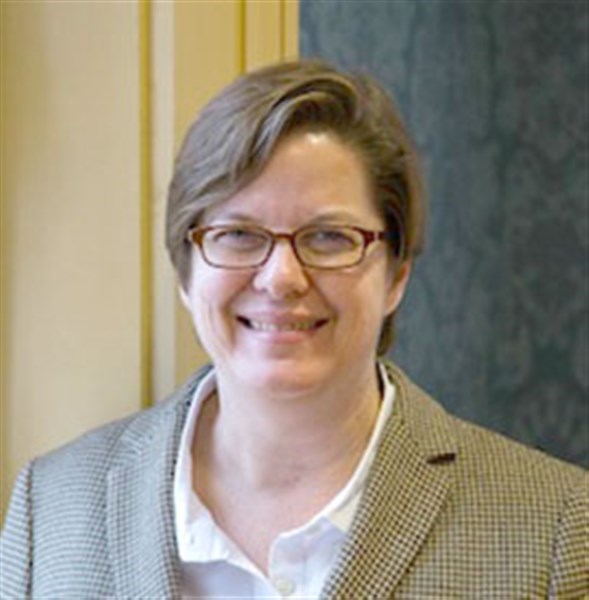
Jaime Harker is president of the nonprofit Violet Valley Bookstore. The store is scheduled to open in late November in the old Yalo Studio space on Main Street.
By Jaime Harker
Ever since I joined the English department at the University of Mississippi in 2003, I have been proud to call Mississippi my adopted home. I moved to Water Valley in 2008, and except for a six-month hiatus, I have lived here ever since. My wife and I were married in Water Valley, and we own a home here.
I never expected, when I moved here, that Water Valley would help me realize a lifelong dream of opening a bookstore. But thanks to book donations and support from friends, former students, and Mississippians, I am opening a nonprofit bookstore next month on Main Street: Violet Valley Bookstore. I believe bookstores are essential to a vibrant community and a healthy democracy. They encourage curiosity, develop empathy and provide essential knowledge.
The core of Violet Valley Bookstore will be used books, donated to the bookstore and resold inexpensively. The American Association of University Women of Oxford donated books from their annual sale to Violet Valley; those books encompass a wide range of knowledge and interests, including cookbooks, contemporary fiction, religion and spirituality, history, children’s books, art, psychology, and classic literature. The books are diverse enough to match the interests of every Water Valley citizen.
Violet Valley books will also offer new books, focusing on feminist and LGBTQ books. I teach and write about such books, and I want to share my love for this literature with the larger community. This emphasis also reaches out to LGBTQ members of the Mississippi community who are marginalized.
I have taught many LGBTQ students in the last 14 years, and they tell me stories of rejection and pain; many have been bullied by their own families and faith communities. I am haunted by the ones who never make it to university. Forty percent of homeless youth identify as LGBTQ, though they make up only seven percent of the larger population. LGBTQ youth are also an inordinately high percentage of youth suicides. Of those who make it to adulthood, many leave their home state and their families, because they believe there is no place for them in Mississippi.
Water Valley’s own Hubert Creekmore moved to New York City, and his identity as a gay man is still obscured by many in this community. I can’t tell you how many of my students have moved to Seattle and New York City and Dallas and Atlanta, giving their considerable talents to other communities in other places. They move away for better economic opportunities, but they also move away because they believe that Mississippi does not want them, not just LGBTQ citizens but young people of many ethnicities, religions, and political beliefs.
No other state has lost more millennials than Mississippi in the last five years, and that trend continues to hurt the state—economically, politically, and, I believe, spiritually.
It breaks my heart that so many use Christianity as a justification for their own fears and misconceptions regarding the LGBTQ community. A radically new understanding of love is at the heart of Christianity, and it is a love grounded in acceptance, inclusiveness, and grace. Jesus insisted that we love not just our friends, our fellow believers, or our ethnic tribe; true Christian love transcends boundaries of nation and ethnicity.
As Paul wrote in Galatians, “There is neither Jew nor Greek, there is neither bond nor free, there is neither male nor female, for ye are all one in Christ Jesus” (Galatians 3:28). Jesus urged unity beyond the community of respectable believers. He ate with publicans and sinners, violated traditional religious customs, and included women as important disciples.
He told us to “love your enemies, bless them that curse you, do good to them that hate you, and pray for them that despitefully use you and persecute you” (Matthew 5:44).
Perhaps most significantly, Jesus expanded the bounds of Christian charity. When asked by a scribe how to achieve eternal life, Jesus prompted him to provide the answer: “Thou shalt love the Lord thy God with all thy heart, and with all they soul, and with all thy strength, and with all thy mind; and thy neighbor as thyself” (Luke 10:27). The scribe then asked, “And who is my neighbor?” Jesus responded with the parable of the good Samaritan, and it is one of his most pointed criticisms about believers’ lack of charity. The priest and the Levite, both pious representatives of the faith, stepped over the wounded traveler. It was the Samaritan—despised as a member of a different ethnicity and a different religion—who loved his neighbor, “bound up his wounds, pouring in oil and wine, and set him on his own beast, and brought him to an inn, and took care of him” (Luke 10:34).
The Samaritan chose not to judge the stranger in his midst but to love him and to serve him. Jesus’ final explanation is direct: “Which now of these three, thinkest thou, was neighbor unto him that fell among the thieves? And he said, He that shewed mercy on him. Then said Jesus unto him, Go, and do thou likewise” (Luke 10:36-37).
I want our LGBTQ neighbors to know that there is a place for them here. I want LGBTQ youth to believe they have a future, and our many Mississippi expatriates to enjoy a joyous homecoming.
Violet Valley bookstore is my way of inviting all Mississippians, and potential Mississippians, to the welcome table. I invite my fellow citizens to come explore the diverse books in our store, and imagine a South that is big enough for all of us.