County Begins Property Cleanup Process On Tillatoba Property
PROTECTED CONTENT
If you’re a current subscriber, log in below. If you would like to subscribe, please click the subscribe tab above.
Username and Password Help
Please enter your email and we will send you a password reset link.
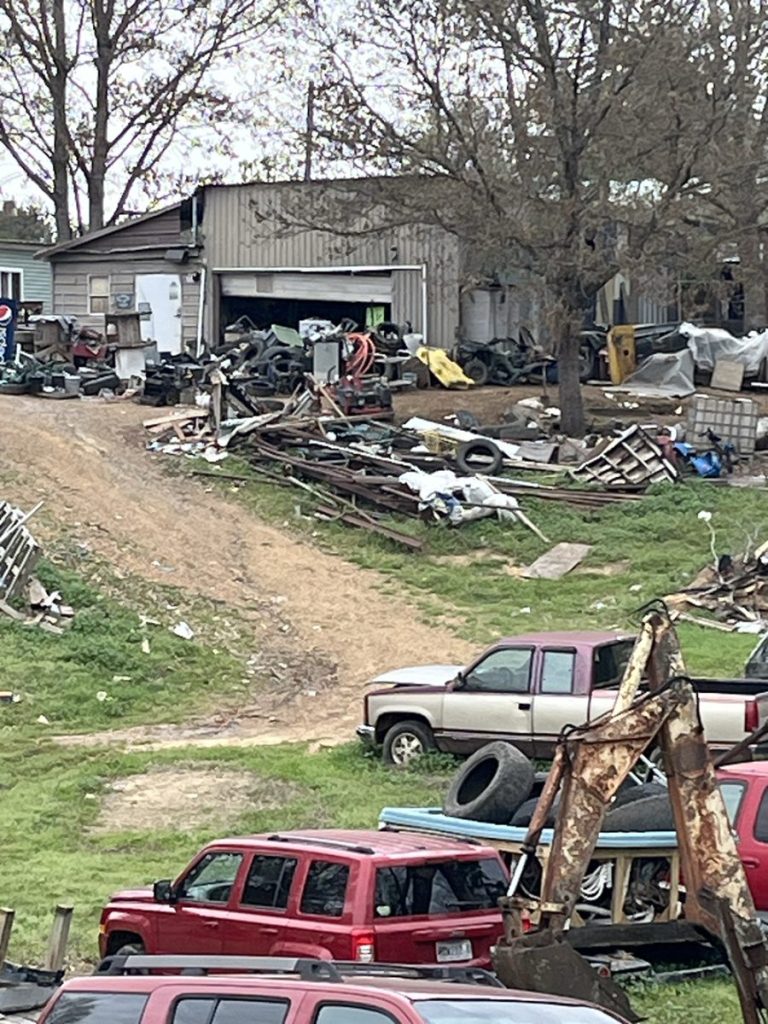
Yalobusha County supervisors have begun the legal process that could lead to the cleanup of this property at 23138 Highway 51 near Tillatoba. Officials said the property contains more than 20 abandoned vehicles and other conditions they believe pose a threat to public health.
TILLATOBA — Yalobusha County supervisors have begun the property cleanup process on a Tillatoba-area property after receiving complaints about more than 20 abandoned vehicles and other conditions officials say pose a threat to public health.
District 5 Supervisor Gaylon Gray brought the matter before the Board of Supervisors during Monday’s meeting at the Water Valley courthouse.
“This is something I hate to do, it’s a property cleanup on Marty Winter,” Gray said.
Gray said neighboring property owners have repeatedly contacted him about the condition of the property and asked the county to take action.
“When folks beg you to do something,” Gray said, “you have to act on it,” explaining why he brought the matter before the board.
Gray said he has visited the property at 23138 Highway 51, just north of the Yalobusha-Grenada County line, on two occasions in an attempt to discuss the concerns with the property owner.
According to Gray, the property contains more than 20 abandoned vehicles, several old tractors and is located in the immediate vicinity of multiple residences.
“It is a bad mess, it is,” Gray said.
District 4 Supervisor Eddie Harris asked whether the county intended to perform the cleanup itself.
Board Attorney Shannon Crow explained that state law requires the county to first hold a public hearing and provide notice to the property owner before any action can be taken.
“You have to post a notice,” Crow said.
Crow explained that the county must mail notice to both the property address and the address listed on the tax records and also post notice at the property.
The hearing will allow the property owner an opportunity to present evidence before supervisors make a determination.
Crow said state law allows counties to address private property that is found to be in “a state of uncleanliness as to be a menace to the public health, safety and welfare of the community.”
Examples cited by Crow can include inoperable vehicles, standing pools of water, overgrown vegetation and old, dilapidated uninhabitable structures.
“Every one of them we have done except one, they have gone and cleaned it up,” Crow said of previous property cleanup cases that ultimately triggered owners to take action.
“If they don’t do it, you get to the hearing date and you make the determination that it is a menace to public health. Then the county can do the cleanup and assess the cost to the tax bill,” Crow added.
Crow also said the county may hire a contractor to perform the work if necessary.
“So what happens to the vehicles, the contractor will move them off the lot?” Harris asked.
“You can’t take them, you have to impound them,” Crow replied.
Crow noted that the county has handled similar cases in nearly every supervisor district and said it is generally preferable when property owners address the issue themselves.
“It is better to let the property owner do it, because even using a contractor, you have government going onto someone’s property,” Crow said. “And you don’t have the authority to clean it up the way the neighbors are going to want it done.”
Gray noted that abandoned vehicles can attract rodents, which in turn attract snakes.
“It is rough in that back yard,” Gray said.
Board President Cayce Washington said nuisance properties can affect the county’s ability to attract new residents and maintain its tax base.
“We always talk about how we’re going to pay our deputies, how we’re going to pay our 9-1-1 clerks and all this stuff. It’s the tax base,” Washington said. “And if you can’t attract that guy that wants to build that $250,000 house, who’s going to move in next year?”
“Nobody,” Gray replied.
“And that’s why it’s important that sometimes we have to be the bad guy and say, look, you’ve got to clean the property up,” Washington said. “It doesn’t cost anything to keep your yard up.”
Gray then made the motion to proceed with the property cleanup process, which was approved by the board.
A public hearing is expected to be held during the board’s July 6 meeting at the Coffeeville courthouse. The hearing will allow the property owner to present evidence before supervisors make a final determination about whether the property constitutes a public health threat under state law. In previous property cleanup cases, supervisors have often granted property owners additional time — typically 30 to 90 days — to address the conditions before the county proceeds with any cleanup action.
If supervisors ultimately authorize a cleanup, any expenses incurred by the county would be assessed against the property’s tax bill.