From Water Valley To The World
PROTECTED CONTENT
If you’re a current subscriber, log in below. If you would like to subscribe, please click the subscribe tab above.
Username and Password Help
Please enter your email and we will send you a password reset link.
Dial Back Sound Launches Artist Residency
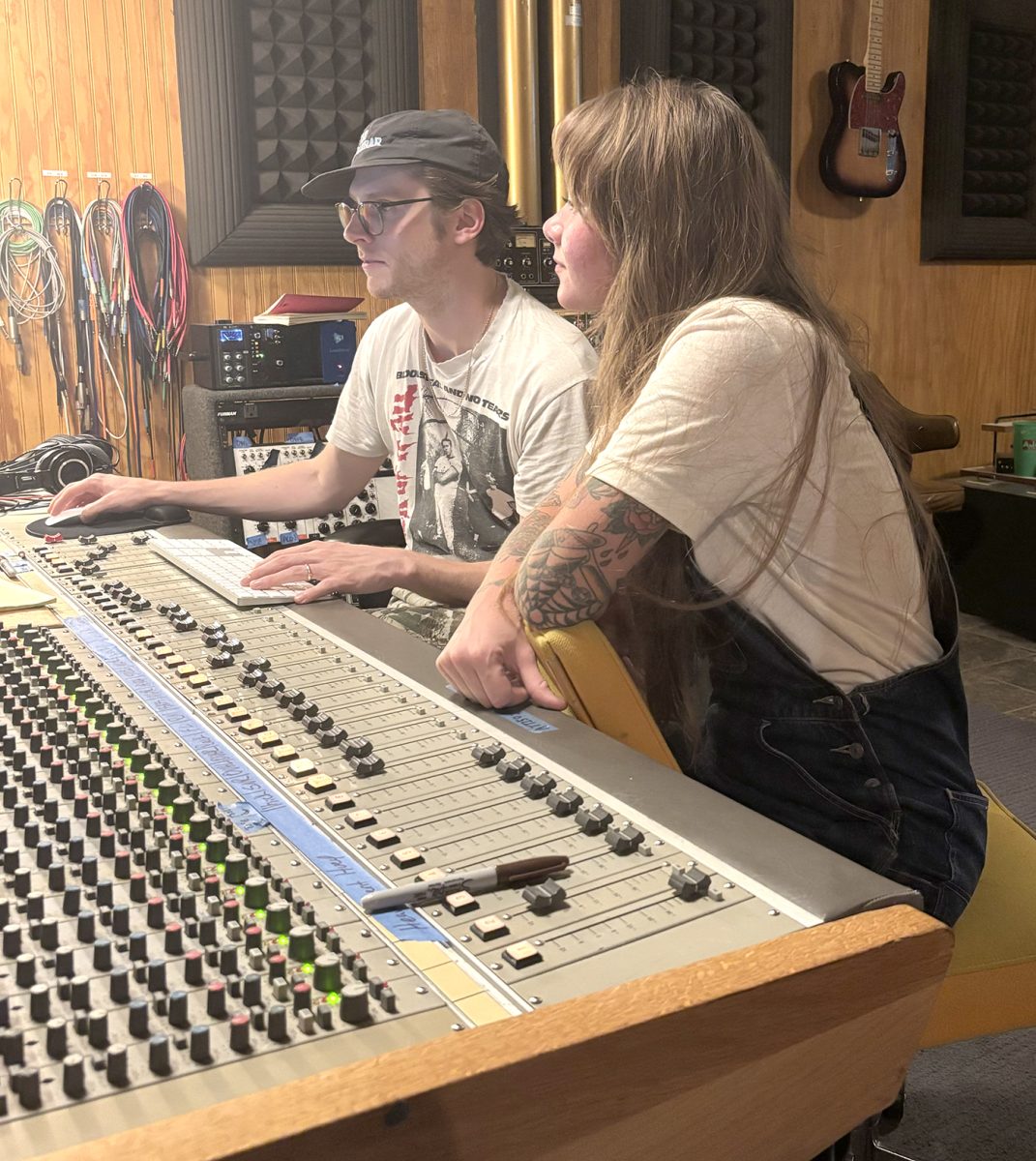
Starlin Browning, recording engineer at Dial Back Sound, and Alex Huey (right) are pictured at the Water Valley recording studio.
WATER VALLEY – On any given week, a musician from New York, California, Chicago or somewhere in between might find themselves walking down Main Street in Water Valley.
They may stop for coffee, grab lunch downtown or spend time browsing local shops before heading back to a recording studio tucked away a few blocks from the center of town.
For the past decade, those visitors have quietly become a regular part of life at Dial Back Sound, the Water Valley recording studio owned by Water Valley resident Matt Patton.
Now Patton hopes to build on those connections through a new artist residency program called “From Water Valley To The World.”
Supported by a group of private donors in the city interested in promoting the arts, the program is designed to bring artists to Water Valley for an extended stay, allowing them to work on creative projects while experiencing the community that Patton believes has become one of the studio’s greatest assets.
“We’ve had people come in from as far away as the Czech Republic, people come in from Washington State, California, Chicago and Brooklyn,” Patton said. “And then they fall in love with Water Valley.”

Matt Patton performs with Drive-By Truckers during a concert at The Caverns in Tennessee. Patton balances touring with the nationally known band and operating Dial Back Sound.
Patton first came to Water Valley around 1999 while recording with producer Bruce Watson, a co-founder of Fat Possum Records and the original owner of Dial Back Sound.
Over the following years, Patton returned regularly to work on recording projects with Watson and other musicians. After marrying his wife Megan, he moved to Water Valley in 2011 and became increasingly involved with the studio. When Watson relocated to Memphis several years later, Patton purchased Dial Back Sound in 2016 rather than see it close.
Today, Patton has spent the past 15 years as a member of the Drive-By Truckers while continuing to operate the Water Valley studio.
“My only vision when I bought it really was how much of a good time I was having out there working on records and how bummed out I’d have been if it closed,” Patton said. “I didn’t want my good time to go away.”
That decision helped preserve a studio that has steadily developed a reputation far beyond North Mississippi.
Over the years, a number of notable artists and projects have passed through Dial Back Sound. Patton said Alabama Shakes recorded demos for the band’s first Grammy-winning record at the studio before achieving national success. More recently, singer-songwriter Thomas Dollbaum recorded at Dial Back Sound with acclaimed musician M.J. Lenderman. Patton said Lenderman first visited Water Valley while performing with the band Wednesday and later returned to work on a project with Dollbaum. As Lenderman’s popularity has grown nationally, Patton said Lenderman’s growing popularity has helped introduce new listeners to Dollbaum and the music they created together.
Patton also pointed to the audiobook production of Wright Thompson’s bestselling book The Barn: The Secret History of a Murder in Mississippi as one of the projects he is most proud of.
Those projects represent only a small sample of the musicians, writers and creative professionals who have spent time working in Water Valley through the studio.
Patton said many visitors arrive expecting little more than a recording session and leave with a different impression of Water Valley. Artists can walk from the studio to restaurants, coffee shops and local businesses, something that often surprises visitors from larger cities.
He joked that Water Valley’s lack of nightlife can actually be an advantage when a band is trying to finish a project.
“There aren’t tons of distractions,” Patton said. “You can literally just come out here and concentrate on your record.”
“People come here and they fall in love with it,” Patton said.
The new residency program grew out of those experiences.
Patton said he began thinking about ways the studio could work more closely with the community and create opportunities that benefit both artists and local businesses.
“Any legendary studio is eventually embraced by the town that it’s in,” he said.
Patton said the first residency will likely focus on music, although organizers eventually hope to include writers, visual artists and other creative fields.
“We thought, let’s bring an artist in from somewhere else and let them experience the town,” Patton said.
Patton said the goal extends beyond making records.
Every album recorded at Dial Back Sound carries Water Valley’s name into the wider world through album credits, streaming services, social media posts and merchandise sold at concerts across the country.
“These bands that come in, these artists that come in, they make the record here,” Patton said. “The physical copies go on their merch table all over the world. When people turn over and look at the credits, it mentions Water Valley.”
“They carry Water Valley with them.”
Inside Dial Back Sound
Dial Back Sound has become one of the most unlikely recording destinations in North Mississippi.
Vintage recording equipment fills the control room. Guitars hang from the walls. A well-used piano sits ready for the next session. Shelves of records, old amplifiers and decades of music history give the building a feeling that is part recording studio and part time capsule.
The studio includes multiple recording rooms, a control room centered around a large analog console, space for musicians to stay during recording sessions and a newer studio designed for podcasts, audiobooks and modern digital production.

A painting of North Mississippi blues musician Leo “Bud” Welch hangs inside Dial Back Sound.
For owner Matt Patton, preserving that atmosphere is part of what makes the studio special.
“If we’re just kind of going for that vintage sound, there’s not a better way to achieve it,” Patton said while discussing the studio’s analog tape equipment.
Dial Back Sound still offers artists the option of recording to analog tape, a process Patton said helps recreate the sound found on many classic records.
“We didn’t even really notice it until it was gone,” Patton said of the subtle sounds associated with older recordings.
While much of today’s music is produced entirely on computers, Dial Back Sound continues to blend old and new technology. Artists can record using traditional analog equipment, modern digital tools or a combination of both.
Patton said the studio’s second recording space has opened opportunities beyond music, including podcast production and audiobook recording.
One of the projects he is most proud of was the audiobook production of Wright Thompson’s bestselling book The Barn: The Secret History of a Murder in Mississippi.
Head engineer Starlin Browning knows the building as well as anyone.
Browning first arrived as an intern while studying audio production at Delta State University. After spending several years building a recording career in Florida, he returned to Water Valley and now works full time at Dial Back Sound.
“I still have dreams that are set in this place,” Browning said.