Supervisors Discuss Animal Control Challenges
PROTECTED CONTENT
If you’re a current subscriber, log in below. If you would like to subscribe, please click the subscribe tab above.
Username and Password Help
Please enter your email and we will send you a password reset link.
 COFFEEVILLE – A complaint about two large dogs bothering an elderly County Road 168 resident led to a wide-ranging discussion about stray dogs, vicious dogs and the limited options available when county residents call for help during the June 1 meeting of the Yalobusha County Board of Supervisors at the Coffeeville Courthouse.
District 4 Supervisor Eddie Harris brought the matter before the board after fielding a phone call from a 75-year-old woman who said a German Shepherd and bulldog had been coming onto her property and jumping on her.
According to Harris, the dogs have not attacked anyone.
“But she said she’s afraid that they’re going to knock her to the ground and injure her,” Harris explained.
The woman first contacted Second Chance Animal Alliance (SCAA), which directed her to the sheriff’s department. Harris said the sheriff’s department then directed her to contact her supervisor.
“She called Second Chance Animal Alliance. SCAA told her to call the sheriff’s office. The sheriff’s office told her to call her supervisor,” Harris said.
“So here we are,” Board President Cayce Washington replied.
“What do you propose we do? I didn’t know we regulated dogs jumping on folks. Who are the owners of the dogs?” District 5 Supervisor Gaylon Gray asked.
“She don’t know who they belong to,” Harris answered.
Gray questioned whether the dogs were strays or belonged to someone nearby.
“The dogs are hanging around her house. Is there a house close by?” Gray asked.
“Yeah, there’s one not too far from there. She don’t think it’s the neighbor’s dog,” Harris said.
The conversation then shifted to the county’s vicious dog ordinance.
“You know that vicious dog ordinance. I mean, they’re large dogs,” Gray said. “The sheriff’s department can deem them vicious. That’s what’s in the ordinance. If somebody’s in fear of being knocked down, an elderly person, I think that can almost be declared vicious.”
Board Attorney Shannon Crow reviewed portions of the ordinance and explained that residents can file complaints involving potentially dangerous dogs with the sheriff’s department.
“If you’ve got a potentially dangerous dog, that is any dog with a known propensity, tendency, or disposition to attack unprovoked or otherwise endanger the safety of humans or domesticated animals,” Crow explained.
Crow said the sheriff’s department can investigate complaints and determine whether a dog meets the definition of potentially dangerous. If an owner can be identified, the ordinance allows the sheriff’s department to require registration, vaccination and confinement requirements.
Crow said the ordinance is not limited to dogs that have already bitten someone. He noted that if an elderly resident is frightened by a large dog repeatedly coming onto the property, and risks being pushed to the ground if the dog jumps on her, the sheriff’s department can investigate a complaint and determine whether the dog meets the ordinance’s definition of potentially dangerous. If so, the owner can be required to keep the animal properly confined.
But Harris pointed out the central problem.
“We don’t know who the owner is,” Harris stressed.
That led to another question.
“When the sheriff gets the dog, what does the sheriff do with the dog?” Harris asked.
“Supposed to impound them,” Crow answered.
“Impound them where?” Harris countered.
“City pound (Water Valley) is where we put some in the past,” Washington replied.
The exchange opened a broader discussion about whether the county should establish some type of holding facility for dogs.
“The only viable solution that I can come up with in my mind, and it’s not the best but it’s an option, is to put a holding pen somewhere in the county,” Washington said.
Washington also stressed he was not suggesting the county actively search for stray dogs if a holding pen is ever constructed. Instead, he envisioned a system where dogs would only be picked up after complaints were received.
“If we get the call, we retrieve the animal, take a picture, put it on social media, this dog’s been impounded,” Washington said as options were explored.
The board president suggested a holding period before euthanasia if an owner could not be located.
“The clock’s ticking. It’s got 14 days before we euthanize them,” he suggested as an option.
“If somebody is begging for help, you have to try to help them,” Washington reiterated.
Gray pointed out the practical difficulties.
“If we have a holding pen, it wouldn’t be a week, it’d be 40 dogs in that pen,” Gray said. “From Chihuahuas to Great Danes, you’re going to have to feed them. You’re going to have to water them.”
Washington agreed there were no easy answers.
“I don’t know what you do with them,” he said. “We do have trustees and we got land behind the county jail. We can build a dog kennel and let the trustees manage them once we house them. I don’t know. I don’t have a good answer.”
Supervisors also discussed partnering with Lafayette County for animal housing services or hiring a contract dog catcher.
District 3 Supervisor Kenny Harmon also noted the sheriff’s department is not equipped to capture vicious dogs.
“Do y’all think there’s somebody out there that we call when we have a complaint and we pay him a certain amount to go get the dog?” Harris asked.
“What are you going to do? Have a poodle price and a pit bull price, or what?” Gray joked.
Chancery Clerk Donald Gray cautioned that paying someone by the call could become expensive.
“If you pay a dog catcher per call, you are going to get a ton of these calls,” he said. “You might as well anticipate paying them a salary.”
Supervisors also noted that dog-related complaints are nothing new in Yalobusha County.
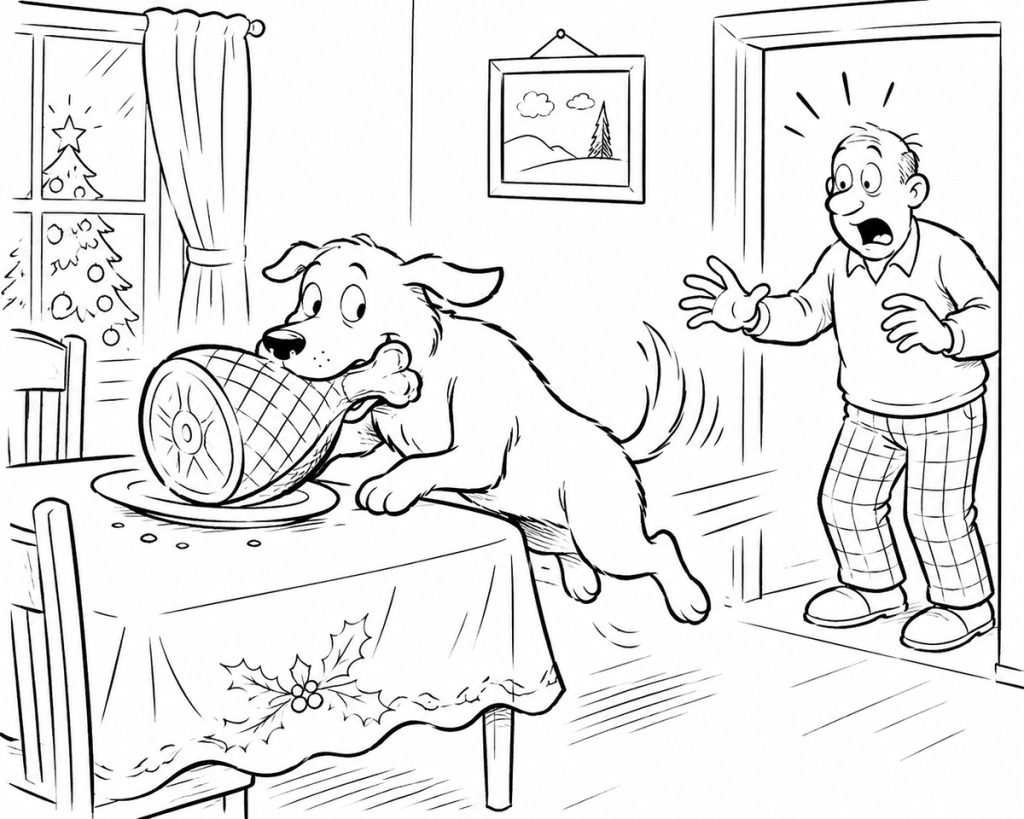
“I’ve had calls where they said the dog was up on the kitchen table eating their Christmas ham,” Gaylon Gray said. “True story. Got the ham and left. Went out the door with it.”
The discussion returned to the immediate concern involving the elderly resident.
“The lady called me Friday,” Harris said. “I told her I’d get back with her the first of the week after the board meeting. I would hate to not do anything and the dog knock the lady down and injure her.”
“Like you said, you’ve got to try to do something,” Gray agreed. “They don’t know who else to call.”
Washington then offered a temporary solution.
“Let’s relocate the dog,” he told Harris. “I’ll go out there with you.”
Washington suggested relocating the animals to the county-owned landfill, noting that several stray dogs already reside on the property.
Yalobusha County Dog Control Timeline
2012 – The Yalobusha County Board of Supervisors adopts a vicious dog ordinance for unincorporated areas of the county. The ordinance authorizes the sheriff’s department to investigate complaints involving potentially dangerous and dangerous dogs, impound dogs when necessary and require owners to register, vaccinate and properly confine qualifying animals. Repeat violations can result in fines, jail time and removal of the dog from Yalobusha County.
2018 – Supervisors approve a contract with Second Chance Animal Alliance (SCAA), agreeing to pay the organization $1,000 per month to respond to stray, abandoned, neglected and vicious dog complaints throughout the county. SCAA also agrees to assist with administration of the county’s vicious dog ordinance.
2019 – The contract with SCAA ends after the organization requests additional funding, citing a high volume of calls. Since then, Yalobusha County has not operated a formal animal control program.
2021 – Complaints involving a pack of dogs on County Road 224 lead supervisors to revisit enforcement of the county’s vicious dog ordinance. Supervisors discuss use of the City of Water Valley’s dog shelter, hiring a contract dog catcher and other options for impounding dangerous dogs, but no long-term animal control program is established.
2024 – Supervisors reaffirm that the county does not pick up stray dogs in unincorporated areas following a high-profile complaint about a litter of puppies that had been abandoned . Board Attorney Shannon Crow advises there is no legal requirement for the county to provide animal control services, though the sheriff’s department remains responsible for enforcing the vicious dog ordinance.
June 1, 2026 – A complaint involving a German Shepherd and bulldog repeatedly coming onto the property of a 75-year-old County Road 168 resident prompts another discussion about dog complaints and the county’s limited options. Supervisors discuss possible solutions ranging from a holding pen to contract dog catchers, but take no formal action. Instead, supervisors agree to attempt to address the specific complaint.