Water Valley Needs A Balanced Way Forward

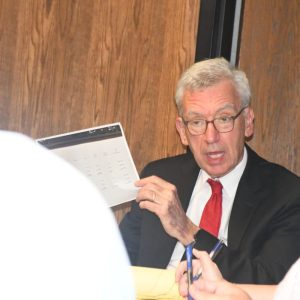
By Grant Thompson
Ward 3 Alderman
Guest Commentary
As we enter our second fiscal year, I want to thank my constituents and the citizens of Water Valley for their support during what I would consider one of the most significant years of change in our city’s recent history.
There have been a lot of opinions and positions shared publicly over the past year, but not many from the Board of Aldermen or myself outside of what has been said during our meetings. After having a year under my belt, I feel it’s appropriate to give the citizens a better look at what I’ve found, what I see and where I believe our city needs to go.
And what a year it’s been! We’ve had changes in department leadership, new commissions established and our share of disagreements along the way. But we’re moving forward, and that’s what we want.
These changes didn’t just happen overnight, though. In many ways, I believe they started about a decade ago when the Board of Aldermen consisting of Cinnamon Foster, Nicole Folson, Fred White, Kagan Coughlin and Herbie Rogers took office. Their work, along with the boards that followed, laid much of the groundwork for what we’re able to discuss and accomplish today.
One of their biggest accomplishments was restructuring our fire department, which at the time was, to put it frankly, in terrible shape. And I don’t say that to place blame on the leadership or employees at the time. The department simply didn’t have the resources it needed.
Our firefighters were dispatching their own calls. That meant one firefighter might have to stay behind to dispatch while another responded to a fire by himself, hoping volunteers would show up to help. Some of our firefighters were making less than cashiers at Fred’s.
Our police department was facing its own challenges, including poor station conditions and limited resources. These departments needed some serious changes, and the boards at the time, along with those that followed, delivered.
Over the past decade, our fire department has grown in paid personnel, firefighters no longer have to dispatch their own calls and we’ve even seen men who left Water Valley for bigger, better-paying departments come back home. I give a tremendous amount of credit to Chief Mark McGavock for creating a work environment that makes people want to be here.
During that same period, Jason Mangrum became police chief and brought significant changes to his department. Both departments moved into the former National Guard building, making it their new home.
And it wasn’t just public safety that saw improvements. Our city employees received across-the-board raises, something that hadn’t happened in a very long time.
These were all good things! Much-needed changes that made Water Valley a better place. And it wasn’t just the boards that made them happen. The men and women working for our city deserve a lot of credit for the progress we’ve made.
These changes, however, did complicate some things. All of those improvements, especially the raises and additional personnel, required more money. And that money had to come from somewhere. One of the biggest sources that helped make these changes possible was the PILOT payment the city received from our electric department.
So What Is PILOT, and Why Is It Even a Thing?
PILOT stands for “Payment in Lieu of Taxes.”
Because our electric department is owned by the city, it doesn’t pay property taxes the same way a privately owned electric company would. So there had to be another way for the electric department to make payments similar to taxes. What Mississippi law and our TVA contract allow is a calculation based in part on the value of the electric department’s property and equipment. We’re talking about power lines, poles, transformers, substations, buildings and the other assets that make up our electrical system.
The calculation considers the value of qualifying assets, applicable tax rates and the requirements of the TVA contract. To put that into perspective, Water Valley’s municipal millage rate is 43.5 mills. That’s one of the rates relevant to understanding how property taxes are determined, although the actual PILOT calculation involves additional assessment and contractual rules.
But here’s the part that I believe is most important, and it’s the part that has caused so much discussion over the past year. Just because a PILOT amount can be calculated doesn’t mean the electric department is required or financially able to pay that amount.
Under Section 6 of our TVA contract, the electric department must first account for its operating expenses, debt obligations, reasonable reserves and working capital needs. Only then can it determine what funds are available for a PILOT payment, subject to the maximum allowed.
In simple terms, the electric department has to be able to take care of itself before making these payments to the city. We can’t expect the electric department to maintain a safe and reliable electrical system if we’re taking money it needs to operate and maintain that system. So that brings me to the questions I’ve been asking since taking office.
Have we maintained accurate records of what our electric department owns? Have PILOT payments been calculated using reliable financial information? And, most importantly, were the department’s other financial obligations being considered before those payments were made?
Well, the electric department’s 2025 audit gave us some answers.
Auditors determined that the electric department had been budgeting, calculating and paying PILOT amounts without following the applicable provisions of the TVA contract.
Specifically, the department had not determined whether sufficient revenues remained to make those payments after meeting its other financial obligations. The audit also identified inadequate procedures for calculating, documenting, approving and reviewing PILOT payments.
Think about that for a minute. We had been making payments to the city without first having adequate procedures in place to determine whether the electric department could financially support those payments under the contract. The auditors warned that this could affect the department’s ability to operate on a financially sound and self-supporting basis.
The electric department acknowledged the finding and reported putting new procedures in place to evaluate its financial obligations before future PILOT payments are approved.
There was also a separate audit warning regarding the department’s fixed assets. Auditors found problems with how certain assets were identified and tagged, along with inadequate controls over capital assets. They warned that these weaknesses could lead to inaccurate asset balances being reported in the financial statements.
Now, I’m not saying that every PILOT payment made over the years was wrong. The audit doesn’t establish that. But it does tell us that the procedures and oversight needed to properly evaluate those payments weren’t adequate.
According to the electric department’s payment history, PILOT payments went from $385,516.59 in 2018 to $610,064.10 in 2025. The department’s schedule lists $625,333.04 for 2026, although inconsistencies identified in 2025 and 2026 resulted in the city not receiving the full calculated payments. Complete and properly tagged fixed-asset inventories were also lacking.
That’s an increase of more than 62% from 2018 to the amount listed for 2026. How did we get to those numbers? What information was used to calculate them? Were the asset values accurate? And were the other financial obligations under the TVA contract properly considered?
We now know from the audit that the department had not established adequate procedures to determine whether sufficient revenues were available before making those payments. And to me, that’s something we can’t just overlook.
For years, these PILOT payments helped fund a significant portion of the city’s operations and improvements. And again, I want to make something clear. I’m not saying those improvements weren’t needed. They absolutely were. But somewhere along the way, we became dependent on money that the electric department also needed to maintain its own system. And now we’re seeing the challenges that come with that.
Our electric department has significant infrastructure needs, maintenance obligations and financial responsibilities of its own.
The Utilities Commission has now determined that, even though a PILOT amount may be calculated, the department’s other financial obligations must come first. Based on its assessment of those obligations, the commission doesn’t believe continuing payments at the previous levels is financially sustainable.
The Utilities Commission has expressed a willingness to work with the city to find other ways to help financially, including sharing certain legitimate expenses rather than relying solely on PILOT payments.
That doesn’t mean we can simply call a PILOT payment something else. Any cost-sharing arrangement has to be lawful, properly documented and represent expenses that can legitimately be shared.
I do, however, believe there are opportunities for the city and Utilities Commission to work together in ways that benefit both, and that’s what I want to see.
I don’t believe this should be a fight between the mayor and the Utilities Commission. I know that the Board of Aldermen is eager to find solutions. We’re all here to serve the same people. The city needs revenue to operate, and the electric department needs revenue to maintain its system.
We also have to look at our other revenue-generating departments, including water, sewer and sanitation. These departments have their own expenses, infrastructure needs and financial obligations. While the rules governing their revenues and transfers are different from those of the electric department, the same basic concern applies.
Are we making sure these departments have what they need to maintain their systems before relying on their revenues to help fund other city operations?
Because if we’re not, we’re simply creating problems that someone else is going to have to deal with later. I don’t believe that’s fair to our employees, our taxpayers or the people who will be sitting on this board 10 years from now. We have to start looking at the whole picture instead of just figuring out how to make this year’s budget work.
This is a lot to unpack in one article, but I do believe there’s hope! I believe there are ways for us to find additional funding for our police, fire and street departments. It may take some thinking outside the box, looking at where we’re spending money, finding new sources of revenue or simply doing things differently than we’ve done in the past. I’m open to any and all suggestions that can help point us in that direction.
But here’s where I stand. We cannot continue to have unbalanced progress in Water Valley, where one department benefits while another suffers. That’s not how we build a stronger city.
Our police officers and firefighters deserve the equipment, staffing and pay they need to do their jobs. Our street department deserves the resources to maintain our roads and infrastructure. And our utility departments deserve the funding necessary to maintain the systems we all depend on.
Public safety is just as important as the services we provide, and those services are just as important as public safety. One should not have to suffer for the other to succeed.
And I want to be clear. I’m not saying we shouldn’t have made the improvements we’ve made over the years. We absolutely needed them, and we’re better off because of them. Somewhere along the way, though, we have to ask ourselves whether the way we’ve been funding everything is the way it needs to be done.
I don’t believe the answer is to take away from one department just to keep another one going. I believe the answer is to look at the whole picture, figure out where we can do better and make decisions that benefit the city as a whole.
Just because “this is the way we’ve always done it” doesn’t mean it’s right.
As public servants, we have a responsibility to question things that don’t add up, correct problems when we find them and make sure the decisions we’re making are in the best interest of the people we represent.
I know some of these conversations have been difficult. I know there have been disagreements, and I know there will probably be more.
We all have a responsibility to do what’s best for Water Valley, even when that means making decisions that aren’t easy or popular. I don’t expect us to fix everything overnight. These problems didn’t develop overnight. But we can start making better decisions now so that 10 years from today, we’re not sitting here dealing with the same problems.
I want our employees to be fairly compensated. I want our police officers and firefighters to have what they need to protect our citizens, including competitive pay. I want our streets maintained, our utilities reliable and our departments financially stable.
I didn’t run for this office just to go along with the way things have always been done. I ran because I love Water Valley, and I want to see us continue to improve. That means giving credit where it’s due, asking questions when something doesn’t seem right and being willing to make changes when changes are needed.
And if there’s a better way to do something, I want to hear it.
That’s what I meant when I said during the board meeting that we need to move forward in a balanced way. Not by holding one department back to move another forward, but by making sure we’re building a city that can support all of them, now and in the years to come.