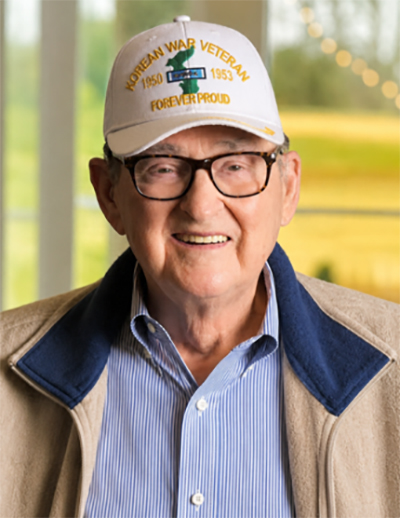
Charles “Chuck” Fowler, a Korean War veteran and longtime minister, served in the U.S. Army until 1956.
WATER VALLEY – Charles “Chuck” Fowler survived bitter cold and combat during the Korean War, an experience that helped shape a lifetime devoted to Christian ministry and service to others.
His son, Richard Fowler, brought a framed newspaper feature to the North Mississippi Herald office last week, sharing the remarkable story of his father, a Korean War veteran and longtime minister who died June 12 at Yalobusha General Hospital. He was 94.
Born May 25, 1932, in Kosciusko, Fowler was the son of Wilburn and Lillian Fowler. He entered the U.S. Army in 1949, a year before the Korean War began, and served until 1956, attaining the rank of staff sergeant.
Fowler was described as being among the first in and last out of the conflict, serving through some of the most difficult campaigns of the Korean War.
According to the earlier newspaper account, Fowler took his military physical at Keesler Air Force Base in Biloxi, completed basic training at Fort Jackson, South Carolina, and received advanced training at Fort Benning, Georgia.
While home on leave, he learned that he had received orders to Korea, where war had broken out.
Assigned to the 65th Combat Engineer Battalion, part of the 25th Infantry Division, Fowler served in a unit responsible for some of the most demanding work of the war. Its missions included clearing mines, removing obstacles, repairing roads and rebuilding bridges to keep American and United Nations forces moving.
The battalion participated in 10 campaigns during the Korean War, according to the original account.
Fowler arrived at the Pusan perimeter, where United Nations forces were making a desperate stand against North Korean troops during the opening months of the war.
The 65th Combat Engineer Battalion was there when Marines were pulled from defensive positions and loaded aboard ships for what became the Inchon landing, a major turning point in the war.
“Many thought it was a withdrawal to Japan but later they learned of the Inchon landing,” Fowler recalled.
Following the landing, the battalion received new orders to advance toward Yeongdeungpo and meet up with Marines moving inland from Inchon. The unit continued north as United Nations forces pushed toward the Chinese border.
Fowler was at the Chosin Reservoir when Chinese forces entered the war and launched an offensive that drove United Nations troops back.
The winter was particularly brutal, with temperatures reportedly falling as low as 50 degrees below zero.
“My whole body froze,” Fowler recalled.
The engineers worked continuously to keep roads and bridges open for retreating troops. They repaired damaged crossings, patched roads and cleared mines and obstacles placed by Chinese forces.
The work was exhausting, and the bitter cold penetrated clothing and equipment.
The continuous effort to keep the retreating army moving contributed to severe frostbite that eventually forced Fowler to be evacuated.
During those desperate days, he recalled praying to God for deliverance.
He remembered having “prayed to a God I did not know to get me out of there.”
Fowler was evacuated by helicopter, the Bell 47 type made familiar by the television series MASH, to a rear medical facility and later transferred to the hospital ship Haven.
While aboard the ship, a doctor told Fowler he could arrange for him to return home quickly if he agreed to have his feet amputated.
Fowler refused.
He eventually recovered without losing his feet and continued his military service. After recuperating, he was reassigned to Germany.
Fowler remained in the Army until 1956, when he was discharged at Fort Lewis, Washington.
The experiences of war, particularly his prayer for survival during the bitter Korean winter, helped shape the faith that later led him into the ministry.
Following his military service, Fowler attended barber school under the GI Bill and eventually operated his own barber shop.
In 1957, he married Mary Olivia Johnston, also of Kosciusko. His wife played an important role in his Christian faith, and he surrendered to the ministry in 1964.
He attended Bible college in Orlando, Florida, and later studied at Southwestern Theological Seminary in Fort Worth, Texas.
Over the years, Fowler and his wife served churches throughout the United States. He retired from preaching in 2002 and settled in Oxford.
His service to fellow veterans continued long after his military career. He served eight years as a chaplain for the Disabled American Veterans in Mississippi and was president of the state organization during his final year of service. He was a lifetime DAV member and also belonged to the American Legion.
Fowler and his wife were married for 63 years. They raised two sons and adopted their granddaughter. Mary preceded him in death Jan. 22, 2022.
Family members remembered him as someone who never met a stranger and was always willing to help others. He enjoyed traveling, visiting people in hospitals and their homes, and following Ole Miss athletics.
He shared his love of Ole Miss sports with his granddaughter, Jordan, attending basketball and baseball games together.
In his later years, Fowler lived at Beau Ridge Assisted Living in Oxford, where he made many friends and continued sharing his faith and memories of military service.
His story is a reminder of the sacrifices made by an earlier generation of American servicemen and the contributions many continued to make long after returning home.
That remembrance continues locally as Water Valley VFW Post 4100 holds its annual Veterans Day observance Wednesday, Nov. 11, at 11 a.m.
Mayor Tommy Reynolds will serve as guest speaker, and the Water Valley High School Band will provide music. A Thanksgiving dinner will follow the program.
Post 4100 Quartermaster and District Commander Mickell Dunn invites the public to attend and honor those who have served.
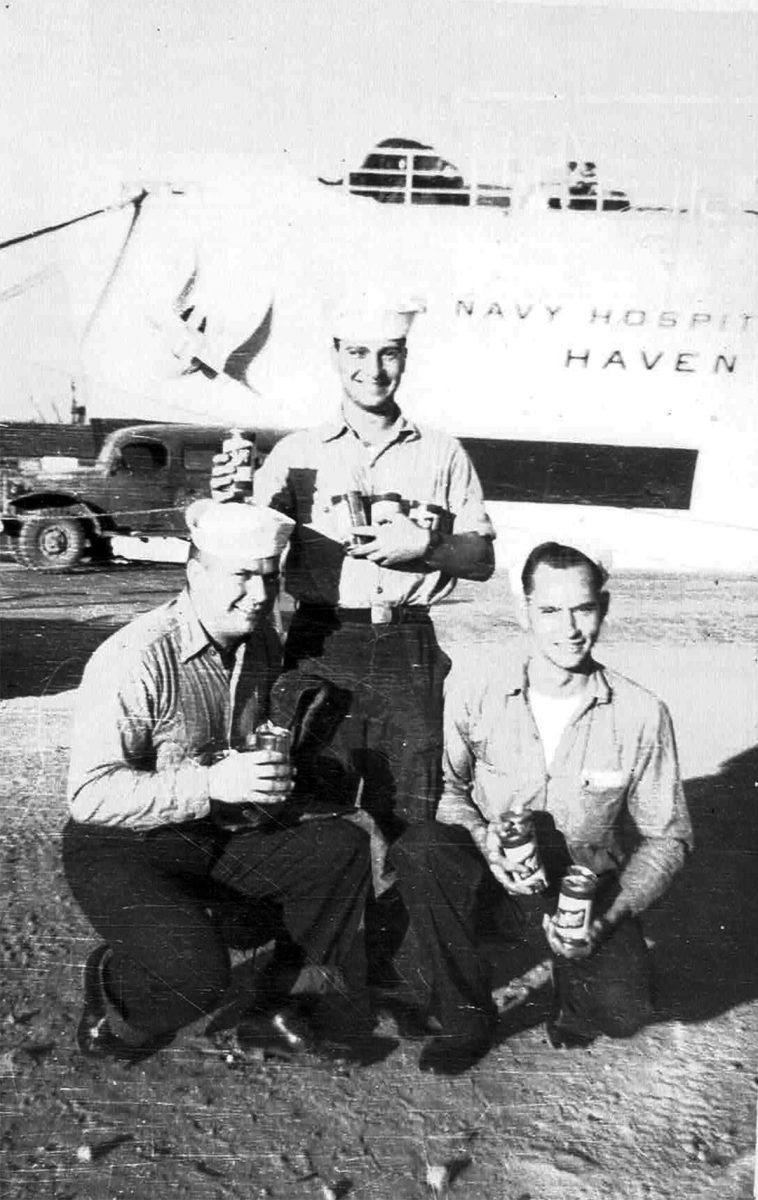
Charles Fowler is shown with fellow servicemen in front of the Navy hospital ship Haven. Fowler was treated aboard the ship after suffering severe frostbite during the Korean War.