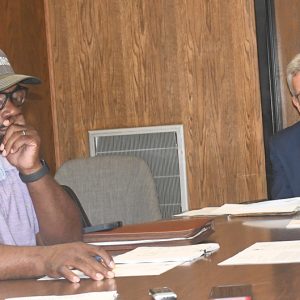
‘Skinny’ Budget Headed For Public Scrutiny

Editor
WATER VALLEY – There is good news and bad news for Yalobusha taxpayers as budget work is finalized for the looming new fiscal year. The good news is that the county and both school districts are not asking for more money for the upcoming fiscal year. In fact, both schools districts are actually asking for a little less revenue from the local tax base. The bad news is a mill will bring in less money in both school districts which means more mills will have to be levied.
This news came in back-to-back budget meetings after county officials plugged in the expenses and revenue for the coming fiscal year. Much of the problems stem from the lingering effect of a global economic downturn that continues to be a drag on the local economy.
Revenue from property taxes continue to decline, with the projected revenue expected to be $82,137 less in the coming year, Tony Green explained. Green is a governmental specialist for North Central Planning and Development District and assists the county with the budget each year.
Much of this comes from decreased values for motor vehicles in the county because people aren’t purchasing new vehicles, Green added.
State revenue that flows to the county is down – reimbursements for homestead, youth court and prisoners. Revenue from justice court fines are also down, almost $14,000. The interest revenue generated from the county’s nest egg is also down because of low interest rates.
These shortages come to $136,693, revenue the county anticipated receiving in the 2010/2011 fiscal year that will not be budgeted in the coming fiscal year.
The county is also required to increase the PERS contribution for county employees, paying 12.93 percent of each employee’s salary for the state retirement. This is up from the current 12 percent paid by the county.
“We are facing these problems in just about every county I am dealing with,” Green explained.
Also complicating the budget was a decline in the land use value set by the Mississippi State Tax Commission for large tract acreage for the second consecutive year.
Tax Assessor/Collector Linda Shuffield explained that this figure is calculated at Mississippi State and is based on five-year rolling average on the income generated by the land use that includes timber value.
One bright spot was the amount a mill generates will increase from $50,264 to $52,731 for the county’s general fund assessment. The increase comes after an industrial tax exemption for BorgWarner rolled off after 10 years. This increased the county’s revenue, but was not enough to compensate for the other revenue shortfalls.
School Budgets
With the assessed value declining in both school districts, supervisors are required to levy more mills to fund the requests by the school. In the Water Valley School District, the total increase will be 2.46 mills. In the Coffeeville School District, the increase in mills will be 3.21 mills. A mill is defined as the tax per dollar of assessed value of property. The rate is expressed in “mills”, where one mill is valued at one-tenth of a cent.
County Budget
The county’s general fund mill assessment will remain steady, at 56.35 mills after supervisors agreed to use almost $83,000 in reserve funds from the escrow account to make up the shortfall.
The shortfall persisted even after county officials searched each line item in all of the department’s budget, making cuts when possible.
“That’s about as skinny as you can get,” Vaughn said about the budget.
The proposed budget does not include a raise for county employees, marking the third straight year with no across-the-board raises.
“One thing we all wanted to do this year beyond a shadow of a doubt is give a raise. It’s been about three years since our employees have had a raise,” District 1 Supervisor Tommy Vaughn stated. Vaughn explained that with the economy lagging, funding raises this year would not be feasible.
The next step in the budget will be a hearing for public input. That meeting is scheduled Sept. 15.