Supervisors Pencil In Budget For New Fiscal Year
PROTECTED CONTENT
If you’re a current subscriber, log in below. If you would like to subscribe, please click the subscribe tab above.
Username and Password Help
Please enter your email and we will send you a password reset link.
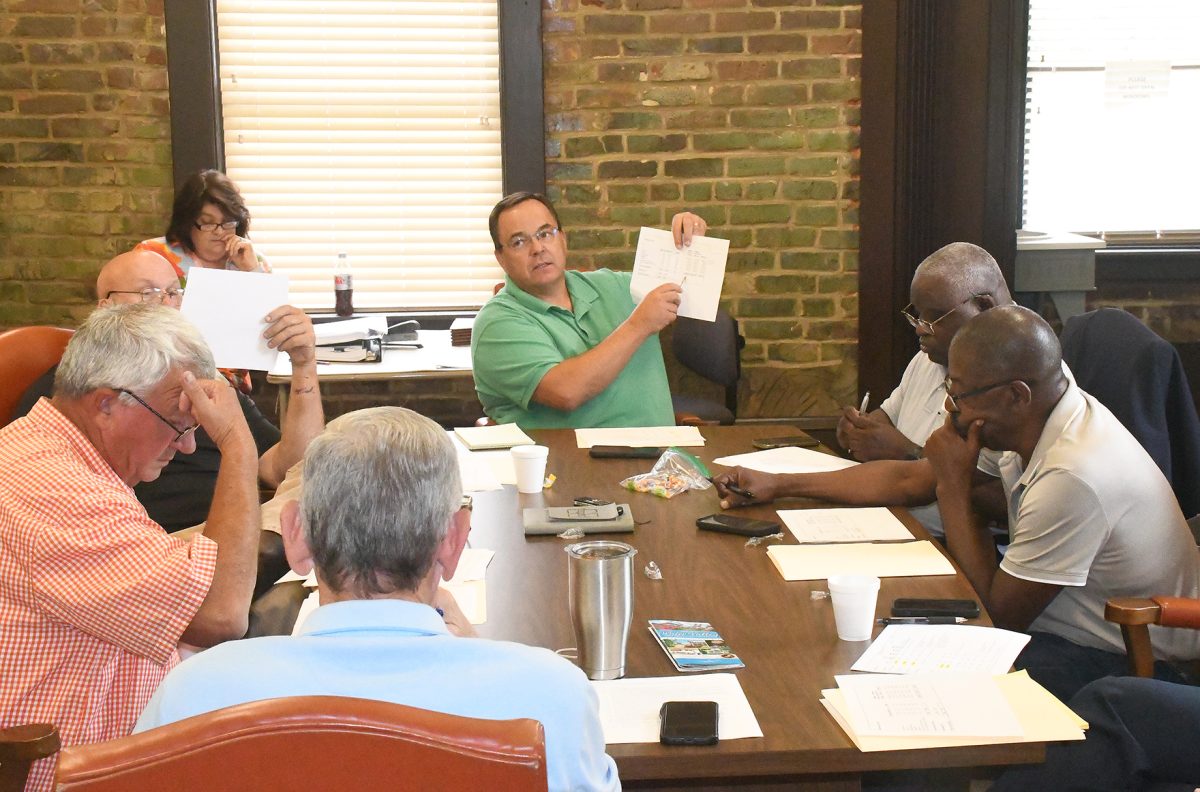
Board President Cayce Washington reviews budget figures with fellow supervisors during Monday’s marathon budget session at the Water Valley courthouse. The board spent most of the day finalizing numbers for the 2025–2026 fiscal year.
WATER VALLEY – In a marathon meeting that stretched from 9 a.m. to nearly 4 p.m. last Monday, Aug. 4, at the Water Valley courthouse, county supervisors hammered out spending for the 2025–2026 budget, with only a brief sandwich break during the day.
The budget discussion began around 10:30 a.m., following several other agenda items, and consumed the remainder of the meeting. By day’s end, the general fund budget had been penciled in with a projected $319,112 increase over the current year’s total — bringing the new total to $4,351,165. Minor adjustments may still be made before adoption in the coming weeks.
Board President Cayce Washington urged fiscal caution at the start of the discussion, even with additional revenue expected from higher assessed property values.
“I have fielded a lot of calls, and I’m sure you guys have too,” Washington said. “One of the things I have heard: we have to listen to what the department heads say they need. We need to see how much money it takes to run the county, and then assess millage to meet those needs. Just because we have extra money doesn’t mean we have to give everybody a whole bunch of extra money in their budget.”
Washington’s remarks followed last month’s presentation by Tax Assessor/Collector Michael Walton, who reported that the county’s taxable value climbed 14 percent — from $79.2 million to $90.1 million — for the fiscal year starting Oct. 1. At the current millage rate of 52.18 mills, that increase would generate an extra $547,733 for the general fund if the tax levy is not reduced. The value of one mill will rise from $77,709 to $87,769.
Key Budget Increases
Much of the new spending is for the sheriff’s department. In February, supervisors approved funding for two new deputy positions at a cost of roughly $104,000 annually. That funding was not in the current year’s budget but is now included for the coming year.
“There are no charges except for the deputies y’all already gave us,” deputy Jerry Ferguson said.
Sheriff Jerimaine Gooch noted that the department’s fleet is in better shape than ever, and that Oxford Police is donating two more vehicles.
Supervisors praised the department for keeping spending in check this year.
“I appreciate you guys, because historically the sheriff’s department has always been over budget. You guys are doing a good job,” Washington said.
Other approved increases include:
• $7,500 to fund $2,500 raises for each of the three MSU Extension Service employees. A $1,500 donation to the county’s 4-H program was also approved.
• $17,573 more for the Yalobusha County Library System after Director Patty Bailey warned that hours or services might otherwise be cut.
• A 10 percent increase to cover a potential hike in employee health insurance premiums. The county currently pays $681 per month for each of its 52 full-time employees.
• A half-percent increase in salaries to cover the state retirement contribution hike taking effect in the new fiscal year.
With these adjustments, the general county millage rate is expected to drop from 52.18 to about 50 mills. However, most taxpayers will still see higher bills due to increased property values.
Additional Tax Levies Add to Bills
Beyond the general fund, other countywide levies will remain unchanged in millage rate but will still bring in more money because of the higher mill value. Collectively, these will generate nearly $200,000 in additional funding for dedicated purposes such as roads, bridges, and fire protection.
For example:
• The 9.20-mill bridge levy will increase revenue from $710,902 to $807,474 — an additional $96,573. The funds are divided among the five supervisor districts based on the number of bridges in each.
• The 4.65-mill road levy will grow from $275,089 to $316,861, an increase of $41,772, or about $8,354 per district.
• The 3.07-mill county fire protection levy will also see a bump in collections, increasing from $152,125 to $171,332.
Background On Property Values
Taxable value is calculated by subtracting homestead and industrial exemptions from the county’s total assessed value, which includes automobile tags, mobile homes, utilities, land, and personal property.
For 2025–2026, Walton reported $10.9 million in homestead exemptions and $14.7 million in industrial exemptions. Industrial exemptions are typically granted to new industries for up to 10 years.
This year’s increase comes after Walton warned that a state-mandated update to the property index used by the Mississippi Department of Revenue would push values higher across the board.