A Big Jump In Tax Bills Has Folks Talking
PROTECTED CONTENT
If you’re a current subscriber, log in below. If you would like to subscribe, please click the subscribe tab above.
Username and Password Help
Please enter your email and we will send you a password reset link.

DAVE’S WORLD
By David Howell
The long-anticipated Yalobusha County tax bills started landing in mailboxes over the weekend, and some folks are reporting increases pushing 30 percent. I’ve already heard several versions of the same reaction — and let’s just say most of them aren’t printable in a family newspaper.
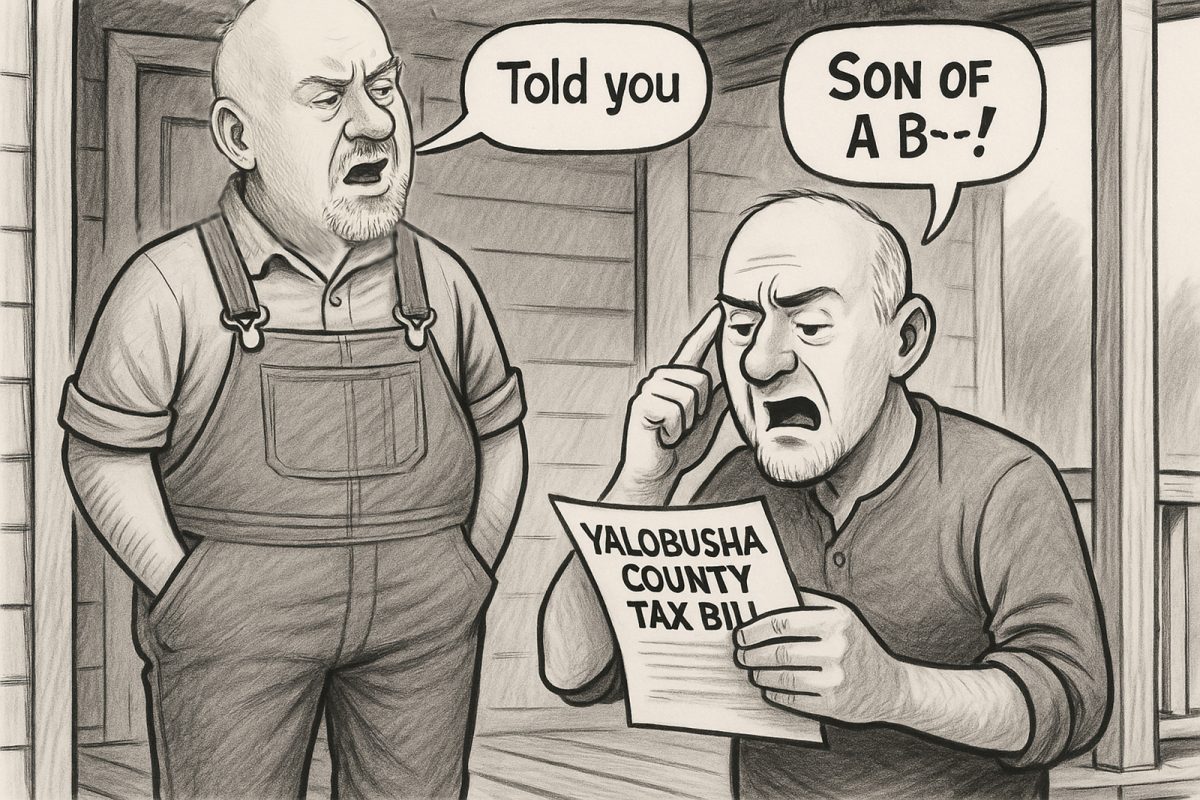
Which brings me to Supervisor Gaylon Gray’s comment from a few weeks back. As people were speculating about what their bills might look like, Gaylon predicted, “These are going to be the SOB bills.”
When you open the envelope, it’s more like: “Son of a —!”
Colorful? Yes. Wrong? Not really.
Like everything with taxes, there’s a story behind the sticker shock.
Tax Assessor/Collector Michael Walton has been sounding the alarm since March. He told every board in the county — supervisors, school trustees, aldermen — that the taxable value of property had to increase this year. State rules require property to be assessed close to at least 80 percent of real market value, and Yalobusha County had simply fallen too far behind.
Walton put it plainly during a presentation to county supervisors back in the spring: “Property assessments in Yalobusha County are at the bottom of the barrel.”
It’s no secret that the taxable value of property in the county has been extremely low. Houses have sold for two or three times their assessed value in recent years. Then inflation pushed construction and housing costs upward, and suddenly years of gradual increases combined with years of low appraisals all hit at once.
So even though supervisors actually lowered the tax rate, or millage rate, slightly, the big jump in assessed value still means most taxpayers will pay more. It’s the simple math:
Higher value × slightly lower rate = still a bigger number.
And that bigger number is really just inflation coming home to roost. Everything costs more today — fuel, equipment, insurance, labor — and counties, municipalities and school districts have to pay 2025 prices too.
In the Water Valley School District, the local tax contribution rose to $2,260,820, up $191,989 from last year. Coffeeville’s numbers also climbed.
And at the county level, spending increased by about $573,000 — almost all of it tied to basic needs. Two new deputies added upwards of $100,000 to the budget, pay raises for county employees added more than $100,000, library funding increased by $17,573, Extension Service raises totaled $7,500 (plus $1,500 for 4-H), and health insurance and state retirement costs both went up. No frills — just the cost of doing business in 2025.
Beyond that, bridge, road, and fire levies will bring in nearly $200,000 more this year simply because the value of one mill rose. The millage didn’t change — the value underneath it did.
Local governments didn’t create inflation, but they can’t escape it either.
Now, here’s the wrinkle and it’s one a lot of folks may not realize:
The big assessment increase does not apply to homeowners age 65 and older.
A 2018 state law freezes the taxable value for seniors unless they add on, remodel, or make significant improvements on the property. Their value stays locked in. So while most homeowners are seeing their assessed value go up, seniors are not — and because the millage rate went down a little, their tax bills will actually decrease this year.
Yalobusha County has 5,037 households, and census data shows roughly 21.6 percent of our population is 65 or older. That’s an estimated 1,080 to 1,100 senior households whose tax burden should drop this year.
Good news for them. Not so good for everybody else.
And here’s the bigger issue: because taxable values across the county were so low for so long, the seniors’ frozen values are now locked in at those depressed numbers for years to come. Their share is frozen in place — which means the working class, along with local businesses and industries, will shoulder almost all of the increased valuation going forward. That’s just how the formula works.
There was talk during county budget meetings back in the summer about trying to hold the line as much as possible and keep spending in the new fiscal year similar to last year. When the smoke cleared, the increase was about $573,000 — likely one of the largest in county history. But to be fair, inflation really does increase the cost of doing business. Raises for county employees, higher retirement contributions, and health insurance premiums all add up. In fact, the county was recently notified that employee health coverage will jump to over $900 a month — even higher than what was anticipated back in August when the budget was adopted.
So if you hear somebody shouting at their mailbox… well, now you know why.