Budget Deadline Looms
PROTECTED CONTENT
If you’re a current subscriber, log in below. If you would like to subscribe, please click the subscribe tab above.
Username and Password Help
Please enter your email and we will send you a password reset link.
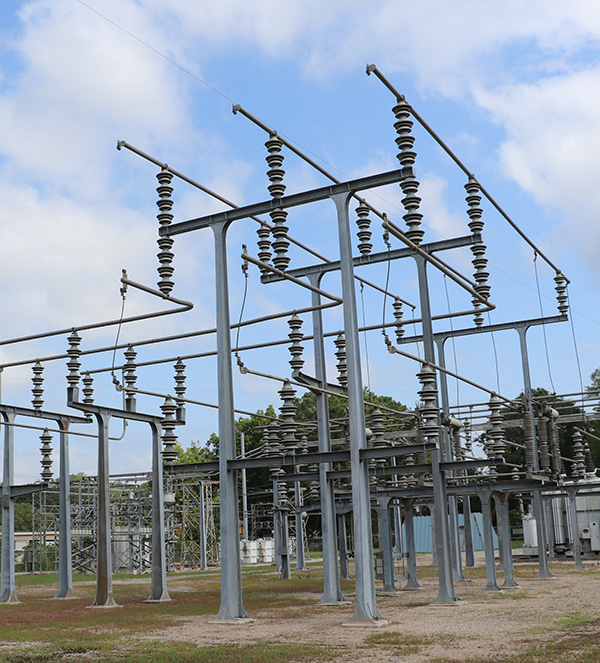
Water Valley currently relies on a single electrical substation, with plans underway for a second substation to provide additional capacity and reliability.
WATER VALLEY — The Tennessee Valley Authority has weighed in on Water Valley’s escalating dispute over more than a half million dollars in electric system revenue, telling city and utility officials that payments to the city’s general fund may be made only after other electric system financial obligations are met.
In a letter dated Tuesday, Aug. 18, TVA also said the payment in lieu of taxes, or PILOT, is discretionary under Water Valley’s power contract and that the Utility Commission may suspend the payment if necessary to meet the contract’s financial requirements.
The letter comes as city officials face a Sept. 15 deadline to adopt a budget for the 2026-2027 fiscal year and a potentially significant hole in that budget if the approximately $522,000 annual payment is reduced or eliminated.
TVA Regulatory Assurance Director Sharon Williams addressed the letter jointly to Mayor Tommy Reynolds and Utility Commission Chairman Brandon Presley, saying TVA was providing its position in lieu of attending Tuesday night’s Board of Aldermen meeting.
TVA cited Water Valley’s wholesale power contract, which has been in effect since March 9, 1978, and requires the city and commission to operate the electric distribution system on a “financially sound and self-supporting basis.”
The contract establishes an order for the use of electric system revenue. Current operating expenses come first, followed by payments on electric system debt. Remaining revenue may then be used to establish reasonable reserves for renewals, repayments and contingencies and provide adequate working capital.
Only after those obligations are met does the contract provide for tax-equivalent payments into the city’s general fund.
“Under the Power Contract, PILOT to the City’s general fund are only permitted if sufficient funds remain after the other enumerated financial obligations have been met,” Williams wrote.
TVA went further, saying the payment is not mandatory even when sufficient revenue remains.
“Moreover, even when excess revenues exist, Section 2 of the Terms and Conditions makes clear that PILOT is discretionary — Water Valley may take PILOT but is not required to do so,” Williams wrote.
TVA said it expects both the city and Utility Commission to “strictly comply” with the power contract and operate the electric system in a financially sound manner.
“If the Commission determines that suspending PILOT is necessary to meet the requirements in the Power Contract, TVA supports taking steps to do so,” Williams wrote.
The letter provides the clearest statement yet from TVA on an issue that has increasingly divided the city and its Utility Commission as both confront significant financial pressures.
For the city, the stakes are substantial.
During an Aug. 11 budget work session, City Clerk Vivian Snider initially projected approximately $3.12 million in revenue for the coming fiscal year, a figure that included about $522,000 from the Utility Commission. Removing that payment dropped projected revenue to approximately $2.6 million.
The $522,000 PILOT represents roughly 16 percent of the city’s approximately $3.3 million general fund budget.
Using Snider’s preliminary figures, City Attorney Daniel Martin compared the $2.6 million in projected revenue with approximately $3.3 million in existing expenses.
“So we’re going to be $700 grand short before anybody gets a raise,” Martin said.
“$2.6 million wouldn’t pay your bills,” Reynolds said. “You’d have to lay off.”
Martin has also disputed suggestions that PILOT itself is unlawful. He said state law specifically provides for payments in lieu of ad valorem taxes by municipally owned power systems and that the city’s agreement with TVA allows tax-equivalent payments.
“So, it’s clearly legal. It’s clearly provided by state law,” Martin said.
TVA’s letter does not dispute that PILOT payments are permitted. Instead, it says Water Valley’s power contract allows the payments only after the electric system’s other enumerated financial obligations are met and makes the payment discretionary even when excess revenue exists.
The scheduled PILOT for the current 2025-2026 fiscal year was $522,000, based on the assessed value of the electric system’s taxable components. Although the municipally owned system does not pay property taxes like a private, for-profit business or industry, its property is assessed similarly. The city, county and school millage rates are then applied to that assessed value to calculate the payment of utility revenue to the city in lieu of taxes.
The Utility Commission stopped its monthly payments to the city following Winter Storm Fern as Presley questioned whether the payments could continue at their previous level after more than $3 million in storm-related electric system restoration and repairs. Presley has also questioned whether the assessed value used to calculate the payment is correct.
Presley issued a 31-page memorandum to aldermen and Reynolds in May laying out the commission’s financial and legal arguments for halting the payments.
Much of Presley’s argument has focused on Mississippi Code §21-27-19, which governs the use of revenue from municipally owned utilities. The statute lists operating expenses, debt and other obligations, improvements and reserves before providing that the balance remaining, “if any,” may be used for other lawful municipal purposes.
“The law requires a true surplus first,” Presley wrote in the memorandum.
Presley argues the city’s longstanding practice turned that order on its head by treating the annual payment as a predetermined expense rather than determining what money remained after the electric system’s obligations were met.
TVA’s letter Tuesday sets out a similar order of priority required under Water Valley’s wholesale power contract, placing PILOT behind operating expenses, debt, reserves and adequate working capital.
Utility Faces Major Expenses
Presley’s May memorandum identified approximately $2.8 million in obligations associated with Winter Storm Fern. Those storm-related expenditures and obligations have since grown to more than $3 million.
The commission is expected to be reimbursed 87.5 percent of eligible costs through FEMA and MEMA, but reimbursement comes after the bills are paid, likely triggering the need for short-term borrowing.
The memorandum also listed at least $3 million as the commission’s anticipated share for construction of a new electrical substation and another $1.5 million to $2 million to replace antiquated copper conductors used in portions of the city.
Using the storm figure available at the time, the memo put those one-time obligations at approximately $7.3 million to $7.8 million.
It also listed recurring expenses, including approximately $160,000 annually to increase staffing of the electric line crew and approximately $150,000 annually for pole, transformer and right-of-way maintenance.
Presley also argues that making a PILOT at previous levels could interfere with the commission’s ability to provide the local match for a federal grant associated with the second substation. The May memo says the commission could not both fund the substation match and continue the PILOT at its historical level under its projections.
City Faces Few Options
The Aug. 11 budget discussion also illustrated how difficult replacing the PILOT would be for the city.
The discussion quickly turned to the city’s largest departments. Officials counted approximately 37 employees among the police, fire and street departments. Fire Chief Mark McGavock said his department was fully staffed but warned that losing personnel could jeopardize the city’s fire rating.
“We could lose our fire rating with (the loss of) one. We’re on the edge right now,” McGavock said.
Asked by Reynolds what a lower fire rating could mean for residents, McGavock replied, “I’d rather double my taxes than double my insurance, let’s put it that way.”
Police Chief Jason Mangrum said his department was about three officers short.
Property taxes offer little room to close the gap. State law limits Water Valley to an increase of approximately four mills, Reynolds noted.
“If we raise ad valorem taxes to the highest we can, we’ll get an additional $88,000, which will just bring us to $615,000 short,” Martin said.
Reynolds also warned that increasing property taxes could work against the city’s efforts to grow its tax base.
“If you get 100 people decide they don’t want to live here because your taxes go higher, you haven’t accomplished anything,” Reynolds said.
The immediate financial picture also emerged as a concern. Officials said the Utility Commission had made only two of the expected monthly payments during the current fiscal year, contributing to the depletion of the city’s reserves. A payment was made Oct. 1, 2025, for $43,500 and the second Jan. 23 for the same amount.
Martin projected the general fund would finish the current fiscal year approximately $99,700 in the red, requiring money from the city’s rainy day fund to balance it.
Cost Sharing Offered
Presley has argued that reducing or eliminating the PILOT would not mean ending Utility Commission support for city services. His May memorandum instead proposed reimbursing the city for documented work performed on behalf of the utility systems.
For the police department, Presley proposed sharing costs associated with investigating utility theft, protecting critical utility infrastructure and reporting street-light outages. For the fire department, he proposed reimbursement for utility-related work including hydrant testing and emergency and safety training.
The proposal also included sharing costs for utility-related work performed by Public Works and the city building inspector. The commission already pays 20 percent of the city clerk’s salary, according to Presley’s memorandum, and he proposed reviewing that percentage and potentially establishing a similar allocation for the deputy clerk based on their utility-related duties.
Presley has discussed approximately $250,000 as a potential amount for the combined cost-sharing arrangement.
Reynolds has advocated maintaining the PILOT at approximately $522,000 and freezing it at that amount going forward.
Four Aldermen Explain Absence
The Aug. 11 budget meeting transitioned to a work session after Aldermen Grant Thompson, Nicole Folson, Demetrius Ingram and Joe Magnuson did not attend.
The four issued a joint statement afterward explaining that the meeting was called late Aug. 10 and they had not received financial documents in advance.
“A budget workshop only works if the people in the room have the actual information needed to make decisions on the budget,” the statement said.
The four said they had requested financial information for months and would meet individually with Snider before returning to the budget as a board.
“We will not vote to spend, cut, raise, reduce or impact city revenues without a full and honest picture before us,” they said.
They also said a similar budget meeting had been held in May and that items discussed then had not moved forward.
Budget Meetings Ahead
At press time Tuesday, the TVA letter and the city’s budget were expected to be central topics as aldermen, Utility Commission members and Reynolds prepared to meet during the regularly scheduled Board of Aldermen meeting.
Mississippi law puts a deadline on that work.
Under Mississippi Code §21-35-5, municipalities are required to prepare their complete budgets for the next fiscal year no later than Sept. 15. The statute also requires at least one public hearing before adoption.
Water Valley’s new fiscal year begins Oct. 1.