City Faces Tough Choices
PROTECTED CONTENT
If you’re a current subscriber, log in below. If you would like to subscribe, please click the subscribe tab above.
Username and Password Help
Please enter your email and we will send you a password reset link.

Alderman Demetrius Ingram (left) questions the city’s authority over the Water Valley Utilities Commission during Monday night’s meeting as Mayor Tommy Reynolds, City Clerk Joy Welch, City Attorney Daniel Martin and others listen.
WATER VALLEY – Nearly two hours of discussion Monday night left Water Valley aldermen still searching for a solution to the city’s financial problems, with no agreement on utility payments and growing frustration over the lack of accurate financial figures.
The meeting opened with a report from Yalobusha County Tax Assessor-Collector Michael Walton, who projected the city’s 43.5-mill property tax levy would generate approximately $1.31 million during the 2026-27 fiscal year that began Oct. 1.
Mayor Tommy Reynolds followed with figures showing the city’s payroll costs at approximately $173,000 per month, increasing to nearly $192,000 with proposed $2-per-hour raises for employees in the street, police and fire departments and administrative workers at City Hall.
Reynolds estimated combined property and sales tax revenue at approximately $164,500 per month, although property taxes are collected primarily during the winter months.
He maintained that without additional revenue from the Water Valley Utilities Commission, the city would face significant cuts to its workforce.
“If we put a meat axe to this budget, you’re going to have a lot fewer firemen and policemen to pay,” Reynolds warned.
Reynolds also reported that the city’s primary operating account contained approximately $1,000 and that officials had stopped writing checks. The city maintains other accounts with additional funds, some restricted to specific purposes.
Reynolds said aldermen would consider a tax-anticipation loan of up to $600,000 at their Tuesday night meeting. The short-term borrowing would provide operating funds until property tax collections begin arriving in December and January.
The discussion then turned to the Water Valley Utilities Commission and the loss of payments in lieu of taxes (PILOT) paid from revenue generated by the sell of electricity.
Commission Chairman Brandon Presley proposed reimbursing the city for services provided to utility operations, estimating those payments could total at least $200,000 annually, possibly more.
“It’s not a payment in lieu of taxes, but it is still funds,” Presley told aldermen.
Those reimbursements could cover the utility’s share of expenses for services provided by city departments, including police and fire protection, street maintenance, inspections and administrative support. Presley also discussed approximately $50,000 in water-system funds that could be transferred to the city with commission approval.
Reynolds maintained that the proposed reimbursements would fall well short of the more than $500,000 the city previously budgeted from the electric department.
Presley argued that the commission could not resume PILOT payments under its current financial circumstances, citing findings from the electric department’s recent audit and TVA guidance.
Complicating the situation is approximately $3.2 million in expenses incurred by the electric department during Winter Storm Fern.
Earlier this month, aldermen approved a request from the Water Valley Utilities Commission to borrow up to $3.2 million through the Tennessee Valley Authority to pay companies and municipal departments that assisted with restoring electrical service following the storm.
The loan is expected to be repaid with federal disaster reimbursements through FEMA, although the timing of those payments remains uncertain.
Presley said the debt prevents the commission from making payments in lieu of taxes under TVA’s financial requirements.
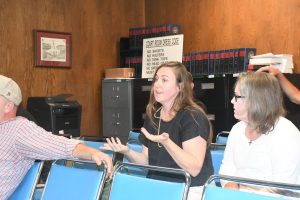
Meagan Backes questioned whether city officials were exploring ways to generate additional revenue during Monday night’s Board of Aldermen meeting.
Alderman-at-Large Herbie Rogers pressed Presley about the electric revenue being collected from city residents while the city struggled to meet its own expenses.
“Where is the money that’s being collected, the revenue that’s being collected from every citizen in Water Valley going?” Rogers asked.
Presley explained that the money remained in the electric department’s operating fund and was still public money belonging to the city.
“We pay TVA half a million dollars a month,” Presley said, explaining that utility revenue also pays employee salaries, equipment and other operating expenses.
Rogers questioned why the city was no longer receiving the payments it had counted on to support municipal services.
“I can’t understand the spending that’s going out with the commission that we’re not getting our portion to the city,” Rogers said.
Presley responded that utility revenue must first cover the costs of operating the system.
“Utility services have to support themselves,” Presley said. “That’s what the law says.”
Presley maintained that the commission had warned city officials months earlier about the loss of PILOT payments and had proposed an alternative reimbursement arrangement in May.
“I wish we’d been having this discussion in May,” Presley said. “Because this issue that you’re talking about tonight didn’t come up yesterday.”
He emphasized that the commission was not opposed to helping the city financially, but that any payments must comply with the utility’s contractual and financial obligations.
Presley proposed having city and utility officials identify shared expenses and establish a reimbursement agreement that both boards could approve.
“Not going back into what the auditors have found we cannot do, but finding a middle ground path forward,” Presley said.
Commission Appointments Questioned
Reynolds also reminded aldermen that they have the authority to determine who serves on the Water Valley Utilities Commission, suggesting the board could take a different approach to the dispute over utility payments.
“You control that board,” Reynolds told aldermen. “And you can, at any time you choose … decide who you want on that board immediately.”
Reynolds maintained that aldermen were ultimately responsible for the commission’s direction because they determine its membership.
“If you agree with what they’re doing, you’re ratifying that,” Reynolds said. “That’s your action. That’s not theirs. That becomes your action.”
Alderman Demetrius Ingram questioned how much control the city retained after creating the commission last year and transferring authority over utility finances, personnel and operations.
“We sat right here at this table, gave them control of the hiring and the firing, control of the finances and personnel,” Ingram said.
“And here we are. With our hands tied behind our back.”
Reynolds disagreed, saying aldermen still controlled the commission’s membership.
Ingram countered that replacing commissioners would not change the legal and financial restrictions governing the utility system, including requirements imposed by state law and the Tennessee Valley Authority.
TVA has advised the city that PILOT payments are discretionary and can be made only after the electric department meets its operating expenses, debt obligations and reserve requirements. Those restrictions would remain in place regardless of who served on the commission.
“If you get rid of all five of the members right now, you get five more. You still duty-bound by law,” Ingram said. “They still got control.”
Thompson raised a similar objection during the discussion, questioning how the city could restore the PILOT payments without violating the utility’s contractual obligations.
“Which part of the contract do we violate? Which law do we break?” Thompson asked.
Reynolds, however, maintained that a different commission might take a different approach.
“You wouldn’t get five that said they’re going to do the same thing,” Reynolds said. “Let’s not worry about that at this point,” he continued, urging aldermen to pursue whatever financial assistance the commission was willing to provide.
Financial Records
Meanwhile, City Clerk Joy Welch disclosed that some city revenues and expenditures had been improperly coded and that the newly adopted budget had not yet been entered into the accounting system.
Alderman Grant Thompson questioned whether the board had enough accurate financial information to make decisions.
“We’ve got to have concrete facts before we can operate on anything,” Thompson said. “The truth is right now we have none.”
Police Chief Jason Mangrum also expressed frustration with the lack of progress.
“We’ve been here for an hour and a half, and the only thing I’ve heard we’ve accomplished is we don’t have money to sign checks,” Mangrum said.
Mangrum urged city and utility officials to begin calculating reimbursement amounts and pressed for figures by the board’s Nov. 3 meeting.
City Attorney Daniel Martin said the city’s financial problems were compounded by two major setbacks during the previous fiscal year.
The Water Valley Utilities Commission made only two of its scheduled monthly payments in lieu of taxes before suspending them following Winter Storm Fern, leaving the city approximately $435,000 short of the revenue it had budgeted.
Martin said the city also incurred more than $400,000 in storm-related expenses outside the electric department, including overtime and other costs associated with the cleanup and recovery.
Together, the lost utility revenue and unexpected storm expenses left the city more than $800,000 behind, Martin explained.
The city expects to recover eligible storm-related expenses through FEMA reimbursements, but those funds have not yet been received.