City Faces Cash Crunch
PROTECTED CONTENT
If you’re a current subscriber, log in below. If you would like to subscribe, please click the subscribe tab above.
Username and Password Help
Please enter your email and we will send you a password reset link.
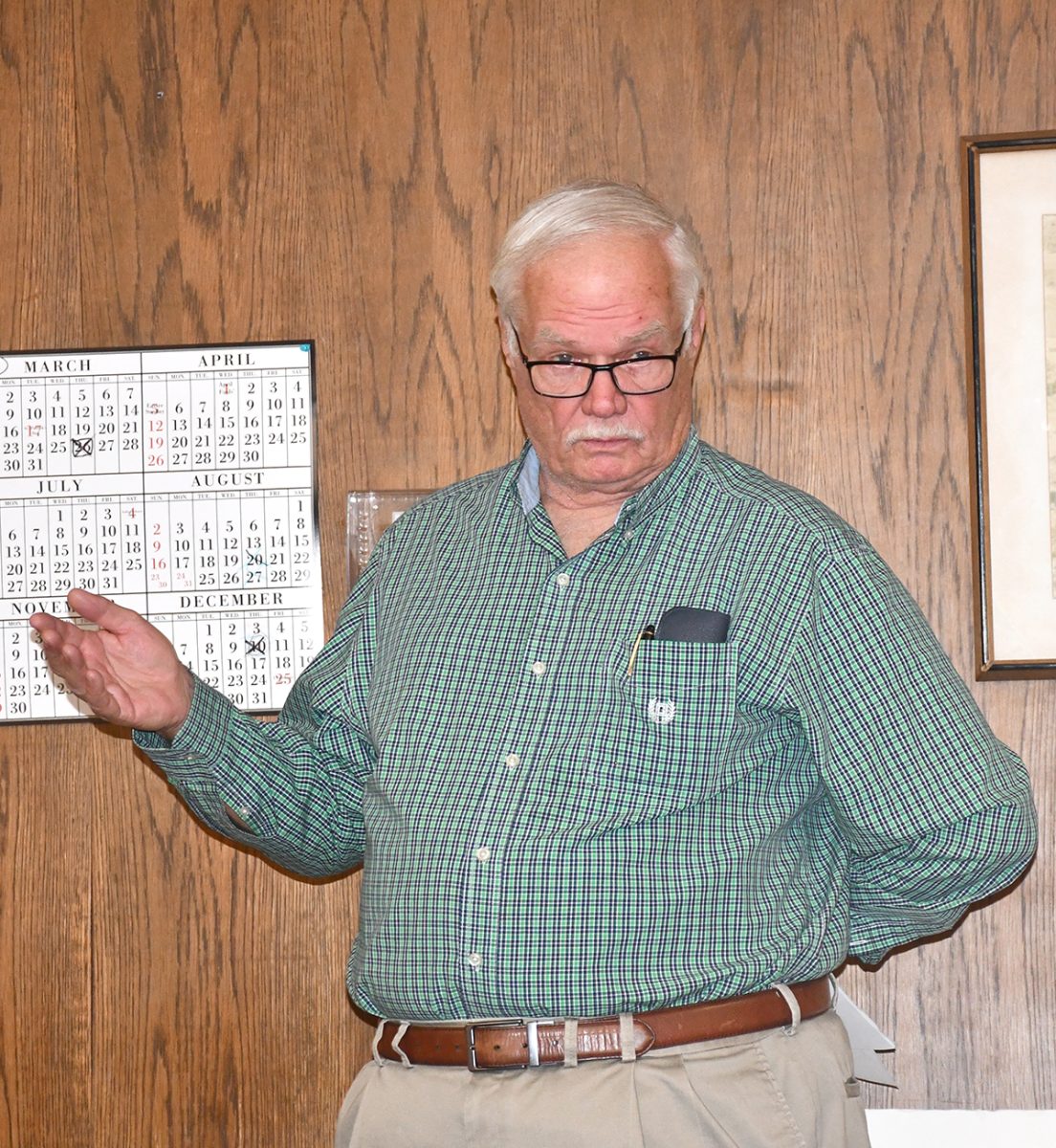
Accountant Joe Black advised aldermen to seek a short-term loan to cover operating expenses until property tax collections begin in December.
WATER VALLEY – City aldermen voted last week to seek bank proposals for a loan of up to $450,000 to help meet financial obligations until property tax collections begin arriving later this year. The action came in the Oct. 6 meeting that included reports from accountant Joe Black and Water Valley Utilities Commission Chairman Brandon Presley.
Black warned that the city lacks sufficient unrestricted cash to cover operating expenses until property tax revenues begin arriving in December.
“The only fast fix for it is the tax anticipation loan,” Black told aldermen.
His review of the city’s bank accounts followed an overdraft of $15,993.21 in the city’s payroll clearing account Sept. 30, which Black attributed to a delayed transfer of funds into the account. He also noted that while the city had approximately $3.91 million in bank balances, much of that money was restricted to specific purposes and unavailable for general operations.
Black also explained that the city has monthly payroll obligations of approximately $210,922, including salaries, taxes, retirement and insurance, compared to average monthly sales tax revenue of $55,417.
Property taxes provide a major source of revenue, but most collections arrive between late December and March. Black said the city typically maintains reserves to cover expenses between collection periods.
Utilities Commission Chairman Brandon Presley told aldermen that an independent audit found the electric department had made payments to the city without first determining whether sufficient funds were available. He said the utility’s strained finances prevent those payments from resuming.
“Normally, you would collect taxes, set aside a reserve, and kind of dole it out to yourself throughout the year. Well, that didn’t happen last year,” he said.
Black cautioned that borrowing would provide temporary relief but would not resolve the underlying financial problems.
“The correct fix is going to be a long-term thing of probably two years to get it back in balance and kilter,” he said.
Mayor Tommy Reynolds also warned that city employees could lose their jobs if the city cannot meet its payroll obligations.
“It takes a certain amount to make the city payroll,” Reynolds said. “And if we don’t do it somebody goes home.”
Borrowing Against Taxes
Under the proposed tax-anticipation loan, the city could borrow up to $450,000 against anticipated property tax collections. Black estimated that the city collects a little more than $1 million annually in real estate property taxes, with additional revenue from other property taxes.
The money from the loan would be available as needed, with interest charged only on the amount borrowed. The loan would have to be repaid by March 15.
City Attorney Daniel Martin recommended obtaining proposals from at least two banks before committing to the loan. Aldermen are expected to consider the proposals at their Oct. 20 meeting.
Compounding the city’s financial difficulties is the loss of payments in lieu of taxes (PILOT) from its city-owned electric system. The payments, generated from electricity sales and deposited into the city’s general fund, had been budgeted at $522,000 for the 2025-26 fiscal year.
The Water Valley Utilities Commission suspended the payments following expenses incurred in the aftermath of Winter Storm Fern, making only two monthly $43,500 payments during the previous fiscal year.
The city’s newly adopted 2026-27 budget again includes $522,000 in anticipated PILOT revenue, despite the commission’s position that its current financial condition does not permit the payments.
Chairman Presley addressed the issue during the Oct. 6 meeting, presenting findings from an audit of the electric department covering the prior two years before the commission assumed control in August 2025. The audit identified deficiencies in financial controls, including bank reconciliations, collection procedures, credit card purchases and the handling of PILOT payments. Presley said the commission has taken steps to correct those deficiencies, including improved accounting procedures and discontinuing credit card use.
One of the audit’s most significant findings concerned the calculation and payment of PILOT revenue to the city. The audit noted that the electric department had failed to determine whether sufficient revenue remained to make PILOT payments after meeting its financial obligations. The audit states that the payments are discretionary under the TVA power contract and may be made only after the department covers operating expenses, debt obligations and required reserves.
“The department budgeted, calculated, and paid the PILOT payments in a manner not in accordance with the applicable provisions of the TVA power contract,” Presley told aldermen. “This is the auditor’s finding,” Presley emphasized. “It’s not Brandon Presley’s. It’s not the Commission’s.”
City Attorney Daniel Martin maintained that PILOT payments remain legally permissible if the commission determines that sufficient revenue is available.
But Alderman Joe Magnuson questioned continued reliance on those payments, citing TVA’s position.
“The TVA has already ruled that the PILOT payment can’t be granted,” Magnuson said. “Let’s drop that.”
Martin acknowledged that the commission’s financial findings determine whether payments can legally be made.
“If there’s a factual finding made by the Utilities Commission that they can’t pay us, I agree that the law says that they can’t pay us,” Martin said.
Presley responded that the commission had reviewed the department’s finances and determined that sufficient funds were not currently available for PILOT payments.
Utility Finances Remain Tight
Presley said the electric department projects approximately $7.05 million in revenue for the new fiscal year, leaving only $29,342 after budgeted expenses. The commission adopted its budget the day before the city meeting.
Presley also reported the electric department began the year with approximately $625,000 in cash, less than the equivalent of one month’s operating expenses that TVA expects the utility to maintain in reserve.
Presley also said expenses incurred during Winter Storm Fern have further strained finances, with the commission authorized to borrow up to $3.2 million through TVA for storm-related expenses. Anticipated FEMA reimbursements are expected to cover much of the cost, but Presley said TVA could restrict PILOT payments while the loan remains outstanding.
Presley also told city officials that the commission’s new budget includes no locally initiated increases in electric, water or sewer rates. He projected approximately $150,000 in annual savings from reductions in water and sewer operating expenses.
Commission Offers Reimbursements

Water Valley Police Chief Jason Mangrum questioned whether proposed raises for employees in the police, fire and street departments remained in the city’s budget. The anticipated $2-per-hour raises now appear unlikely following discussion during an executive session in response to the chief’s question.
Despite the disagreement over PILOT payments, Presley reiterated the commission’s willingness to reimburse the city for expenses incurred on behalf of utility operations through a cost-sharing agreement.
Presley said the commission has been offering to share certain costs with the city since May 29, a point he emphasized several times during the meeting. He also said the commission had identified approximately $50,000 that could be provided immediately as reimbursement for expenses already incurred.
Those expenses include a portion of the deputy city clerk’s salary associated with utility operations and maintenance work performed by city employees. Unlike PILOT payments, the reimbursements would compensate the city for documented services provided to the utility system.
Presley said additional reimbursements could be established through formal cost-sharing arrangements between the city and commission.
Reynolds stressed the city’s need for dependable monthly revenue.
“We’ve got to have a monthly amount to pay our employees to keep them,” Reynolds stressed multiple times during the meeting. “And we have monthly expenses we’ve got to pay the government, the Internal Revenue Service. These have to be consistently paid throughout the year.”
Martin asked that the commission resume PILOT payments if its financial condition improves enough to permit them.
Presley agreed that the commission would comply when sufficient funds become available.
Alderman Grant Thompson urged both sides to balance the needs of city departments and the utility system, noting that police and fire services had received major improvements in previous years while the electric system now faces significant infrastructure needs.
“We have got to move forward balanced as a city,” Thompson said. “Let us reason together and move forward, not unbalanced, but as a whole. And that’s how we’re going to have to do this.”
The discussion ended with a verbal agreement with Presley and Reynolds to have a joint meeting to work out a cost-sharing arrangement that would establish which municipal expenses qualify for reimbursement and how much the commission would pay.
New Clerk Reviews Accounts
New City Clerk Joy Welch, who took office Oct. 1, told aldermen she had begun examining the city’s accounting practices, including deposits, bank reconciliations and approximately 40 bank accounts the city has.
Concerns about those practices surfaced when Alderman Grant Thompson reported that a resident had contacted him after a tax check for approximately $4,000, written in April, was not deposited until the Friday before the meeting.
Thompson questioned whether other checks were awaiting deposit. Welch acknowledged finding additional deposits that had not yet been taken to the bank, although she did not specify their amounts or how long they had been held.
Welch said she wanted incoming payments entered into the accounting system promptly, with daily settlements and deposits made the following morning.
“Starting with your daily deposits, I mean, that’s top priority,” Welch said.
Welch, who had been on the job only four days, said she was still reviewing the city’s financial records and identifying procedures that needed updating.
Black said the city’s financial reporting procedures also need improvement, recommending that aldermen receive balance sheets, revenue statements and bank reconciliations at each board meeting.
“Anytime you have a board meeting, you should have a packet that’s got a balance sheet,” Black said, also calling for revenue statements and bank reconciliations.
“This board has asked for that every month and we’ve never been provided it,” Alderman Joe Magnuson responded.
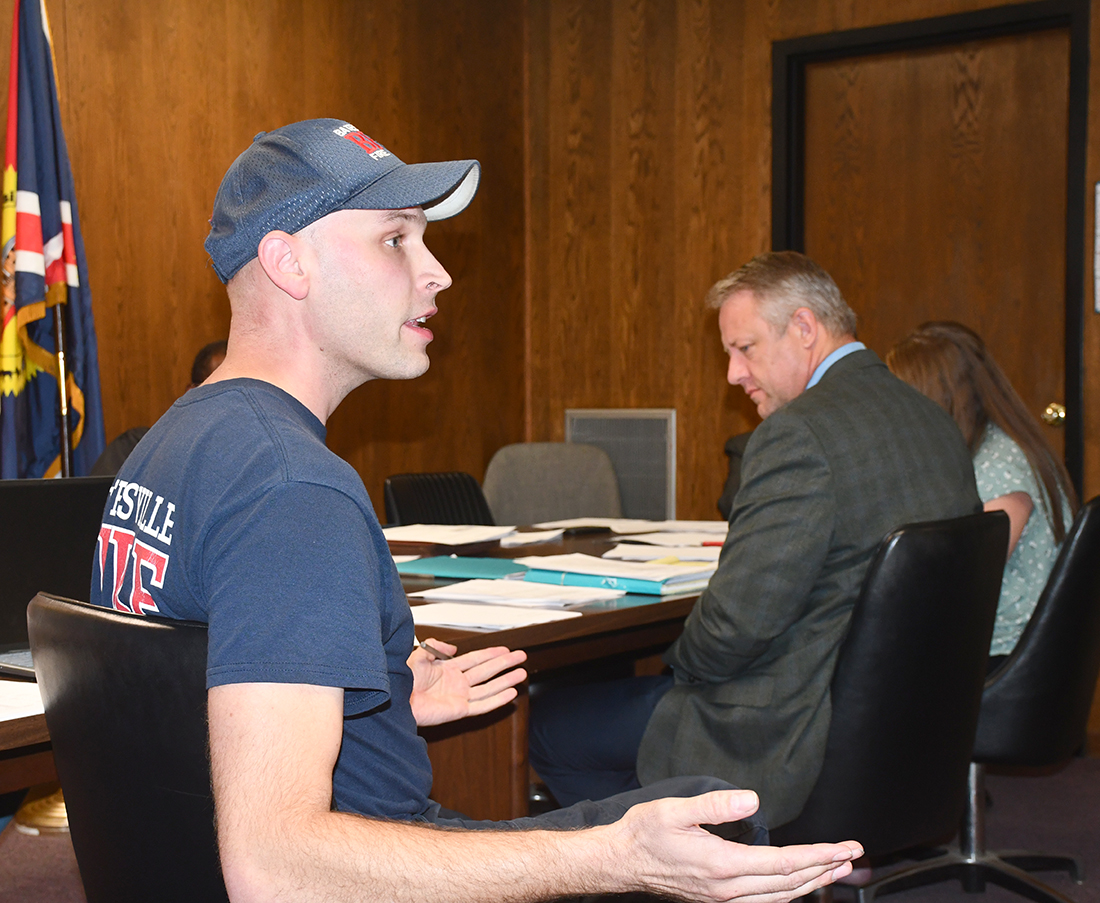
Alderman Grant Thompson urged city officials and the Utilities Commission to work together to balance the needs of city departments with the electric system’s growing infrastructure demands.