Utilities OK $259,000 Plan
PROTECTED CONTENT
If you’re a current subscriber, log in below. If you would like to subscribe, please click the subscribe tab above.
Username and Password Help
Please enter your email and we will send you a password reset link.
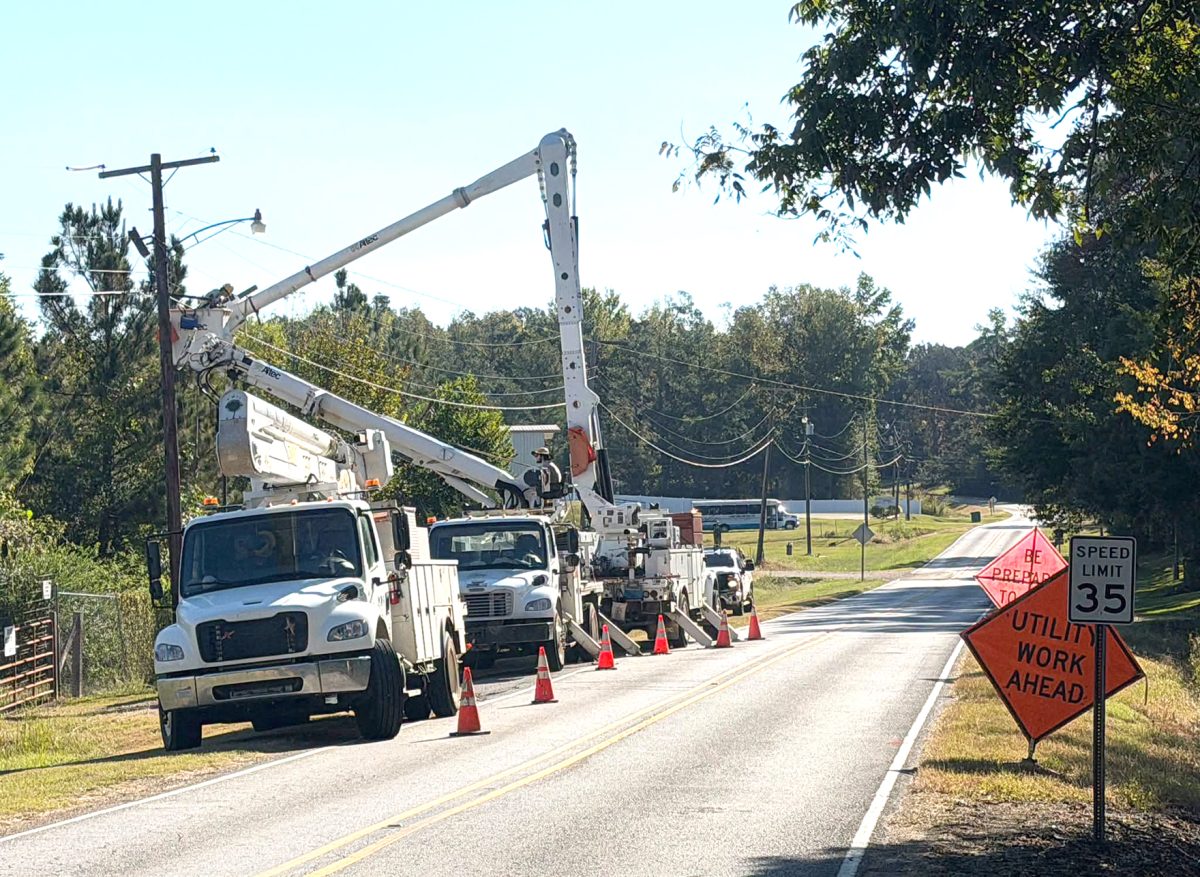
Linemen work to replace aging electrical lines and equipment as part of an ongoing effort to rebuild and strengthen the city’s power distribution system.
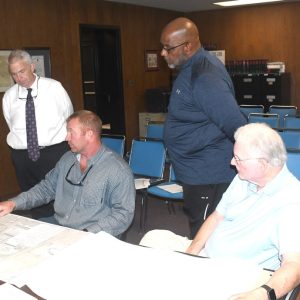
WATER VALLEY – The Water Valley Utilities Commission unanimously approved a cost-sharing arrangement Monday night that could provide the city with nearly $259,000 annually. The resolution establishes a reimbursement program for expenses incurred by street, fire and police employees who perform work benefiting the electric, water, sewer and sanitation systems. The arrangement, estimated at $258,974.57 annually, follows months of discussions about the loss of PILOT revenue.
The commission’s proposal was scheduled for consideration during Tuesday night’s Board of Aldermen meeting, which was underway at press time. The arrangement is separate from PILOT payments, which have been suspended since January’s Winter Storm Fern. The city had previously received approximately $43,500 monthly from the electric system, money used to support municipal operations.
PILOT, which stands for payments in lieu of taxes, is money transferred from the city-owned electric system to the city’s general fund. Because the utility is publicly owned and does not pay property taxes like a private business, the payments provide a source of revenue to help support municipal services.
However, the PILOT payments are not guaranteed. Under the city’s contract with the Tennessee Valley Authority, the electric system must first cover its operating expenses, debt obligations and adequate financial reserves before transferring any remaining funds to the city.
Utility commissioners have maintained that the electric system cannot afford the payments under its current financial circumstances, particularly following more than $3 million in expenses associated with Winter Storm Fern. An independent audit also found that previous PILOT payments had not been calculated and made in accordance with the TVA contract.
“The Department budgeted, calculated, and paid the PILOT amounts in a manner not in accordance with the applicable provisions of the TVA Power Contract. The Department had not determined, prior to payment, that sufficient revenues were available for PILOT after satisfying the financial requirements of the electric system,” the finding by Bridgers, Goodman, Baird & Clarke, PLLC, stated.
Water Valley Mayor Tommy Reynolds wants to freeze the annual PILOT payment at approximately $522,000, allowing inflation over future years to ease the burden on the utility. He has also maintained that the PILOT revenue is essential to support city operations, including police, fire and street departments and without the funding, necessary city services could be cut.
Reynolds also pointed to $7.25 million in state and federal appropriations, grants and funding commitments for the city’s electric system since 2022. In an Oct. 13 statement published in the Reynolds Report, the mayor listed $800,000 in 2022, $750,000 in 2023, $3.5 million in 2024 and $2.2 million in 2026.
Reynolds questioned why the Utilities Commission could not continue making payments to support essential city services despite the outside financial assistance.
Water Valley Utilities Commission Chairman Brandon Presley has stated that much of the outside funding is earmarked for specific projects and cannot be used for general operating expenses. He also said the proposed cost-sharing plan was initially submitted to city officials in May.
“The electric system was drained of nearly $600,000 a year and the result was crumbling infrastructure, repairs that couldn’t be made, and regular outages people had come to expect,” Presley said. “This cost sharing resolution is no blank check. It pays the City, dollar for dollar, for real utility work by City employees, and it goes to TVA before a penny of electric money moves.”
Commission attorney Chris Latimer emphasized that the new arrangement is legally different from PILOT.
“This just lays out the factual basis and legal basis for the commission to reimburse the city any time the city performs services that benefit the commission,” Latimer said. “This is a payment for services rendered.”
Under the agreement, the commission would reimburse portions of salaries and related expenses for city employees whose responsibilities benefit the utility systems. The proposal includes 35 percent of the city clerk’s salary and 35 percent of a deputy clerk’s salary, 25 percent of the police chief’s salary, 40 percent of the salaries of two police officers, 25 percent of the salaries of four firefighters, 40 percent of the building inspector’s salary and 30 percent of the salaries of two street department employees. Duties performed by the fire chief are also included.
Presley said the percentages were developed after discussions with City Clerk Joy Welch, utility business manager Sydney Snider and city department heads.
He explained that police officers already check utility facilities, report streetlight outages and respond to problems involving utility property. Firefighters inspect hydrants, while street department employees repair pavement and perform other work following utility repairs.
The $258,974.57 annual estimate was calculated using September city payroll figures and the proposed percentages.
“The commission recognizes that figure as a rough estimate,” Presley said while reading the resolution. “The commission is not bound to that amount.”
Under the arrangement, reimbursements would be calculated quarterly, beginning with expenses incurred Oct. 1. The first payment could come in January 2027. The electric system’s portion would also require TVA approval of a joint cost study, something Presley acknowledged could delay the first payment.
“TVA’s got to come back and bless the cost-sharing mechanism,” Presley said.
Attending Monday’s meeting were commissioners Ray Hawkins, Terry Allen, Dr. Barry Weeks and Presley.